Selected Work

Aura

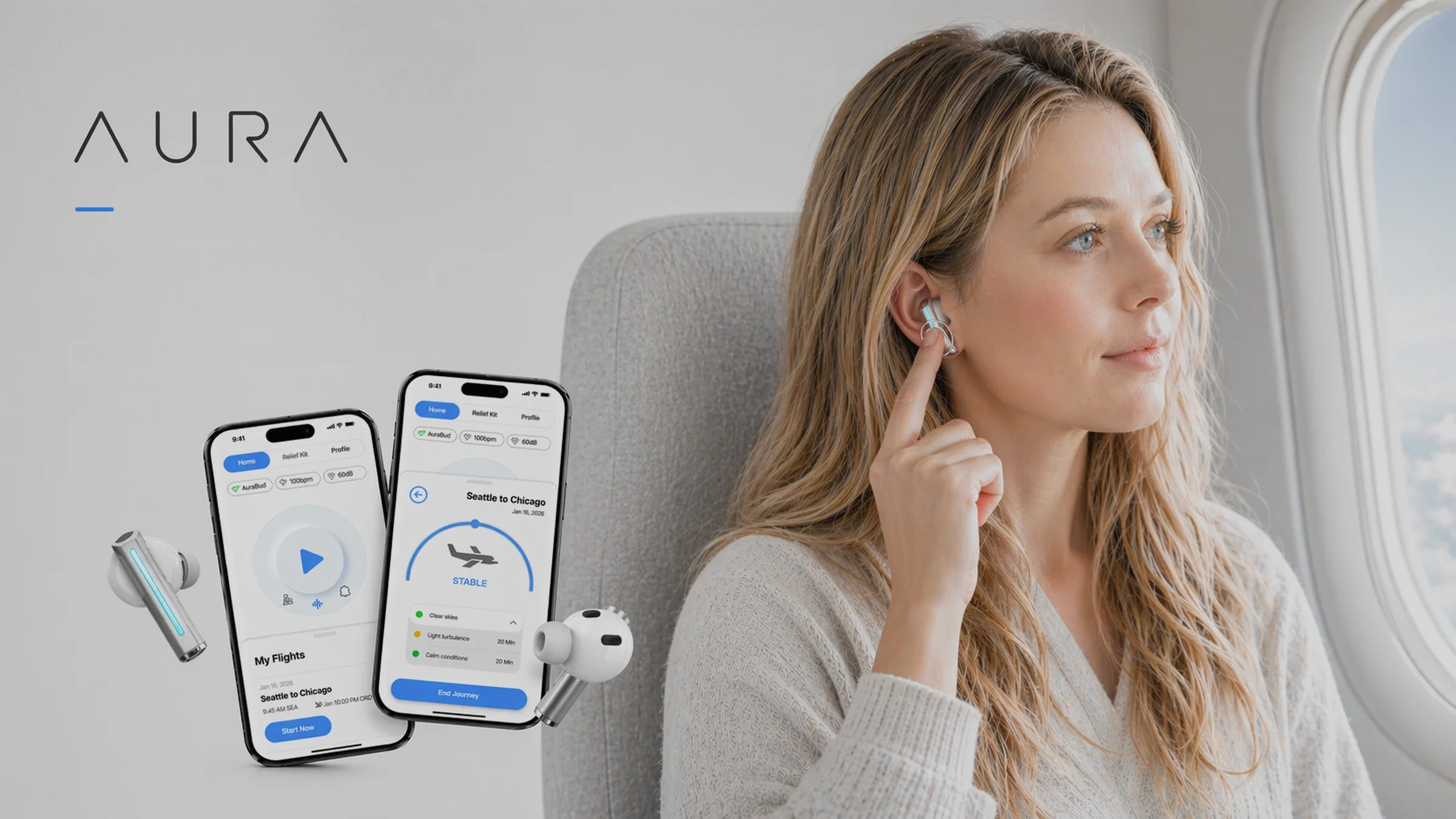
A wearable system built to intervene before motion sickness starts

Aura project visual

Intro

An invisible problem that starts before symptoms

Aura is a wearable system that intervenes before motion sickness starts. The refined earbud form tested at 93.75% preference among 16 users.

For motion-sensitive travelers, discomfort often begins before they consciously recognize it. Aura senses early physiological and motion signals, predicts risk, and delivers subtle audio guidance before symptoms escalate.

As a product and industrial designer on a 5-person team, I shaped the product logic, physical prototype, app experience, and interaction flow across a 5-week sprint.

Role

Product Designer · Industrial Designer

Timeline

5 Weeks · Fall 2025

Team

Malik Zhang Yu-Cheng Yang Jimmy Huang Catherine Fu Marlyn Reed

Output

93.75% Preferred Refined Form (n=16) App Prototype
Highlights

Aura treats motion sickness as a timing problem: it senses the early signals and intervenes with calm audio before discomfort takes hold.

Proactive, not reactiveSense → predict → support100 Hz audio intervention93.75% preferred the refined form

If Aura waited until you felt sick, it was already too late.

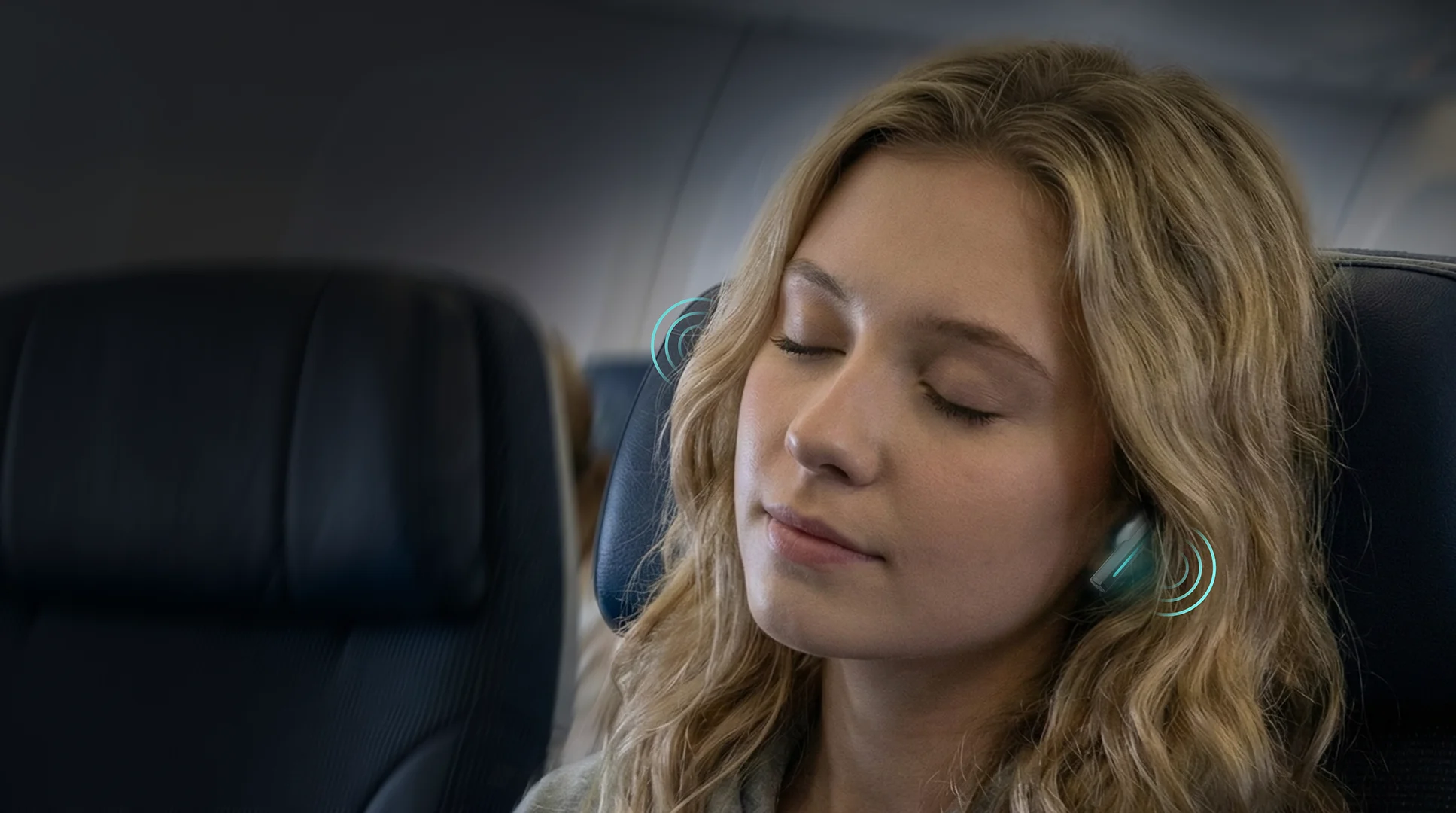
Proactive support, in the moment it matters most

Aura in-flight support scene

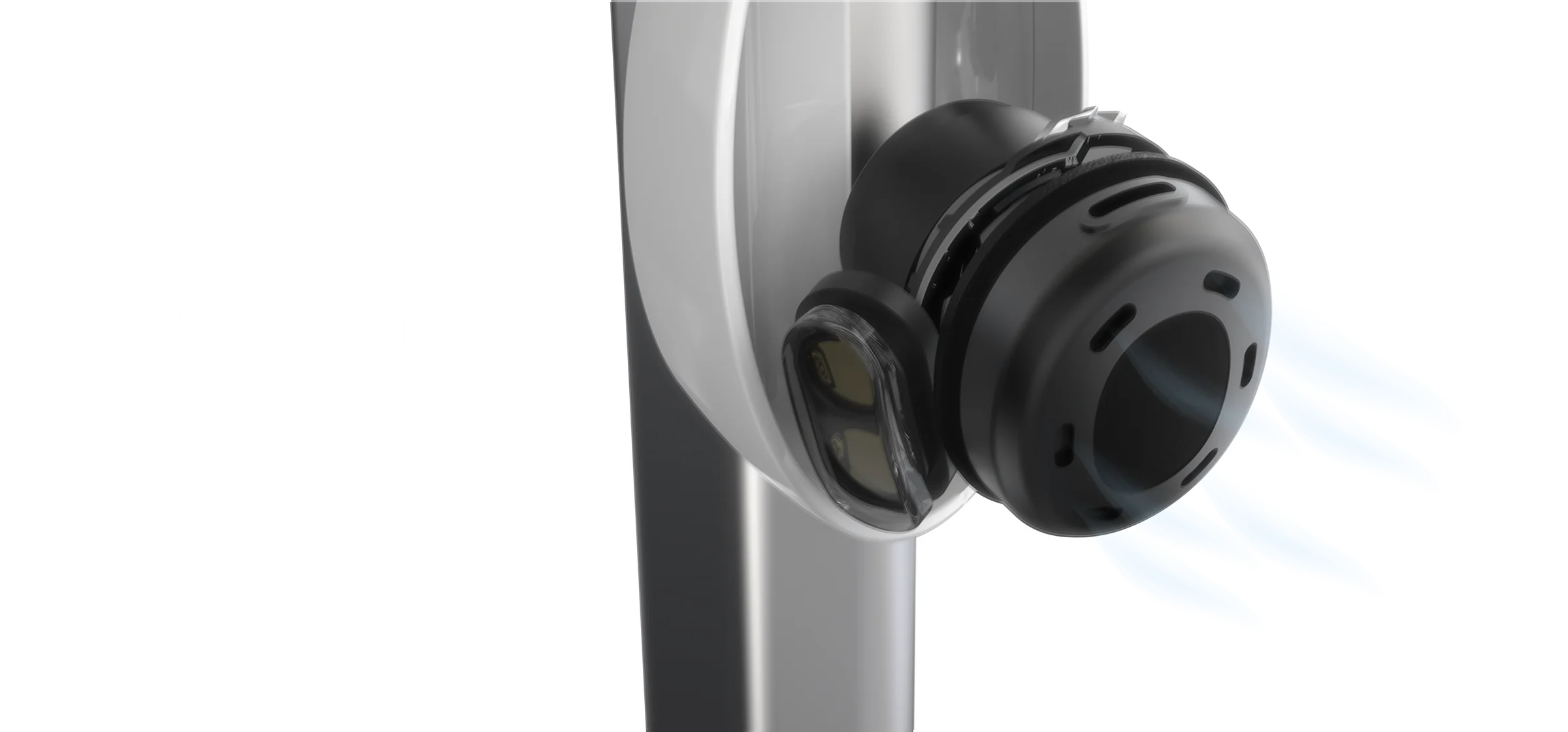
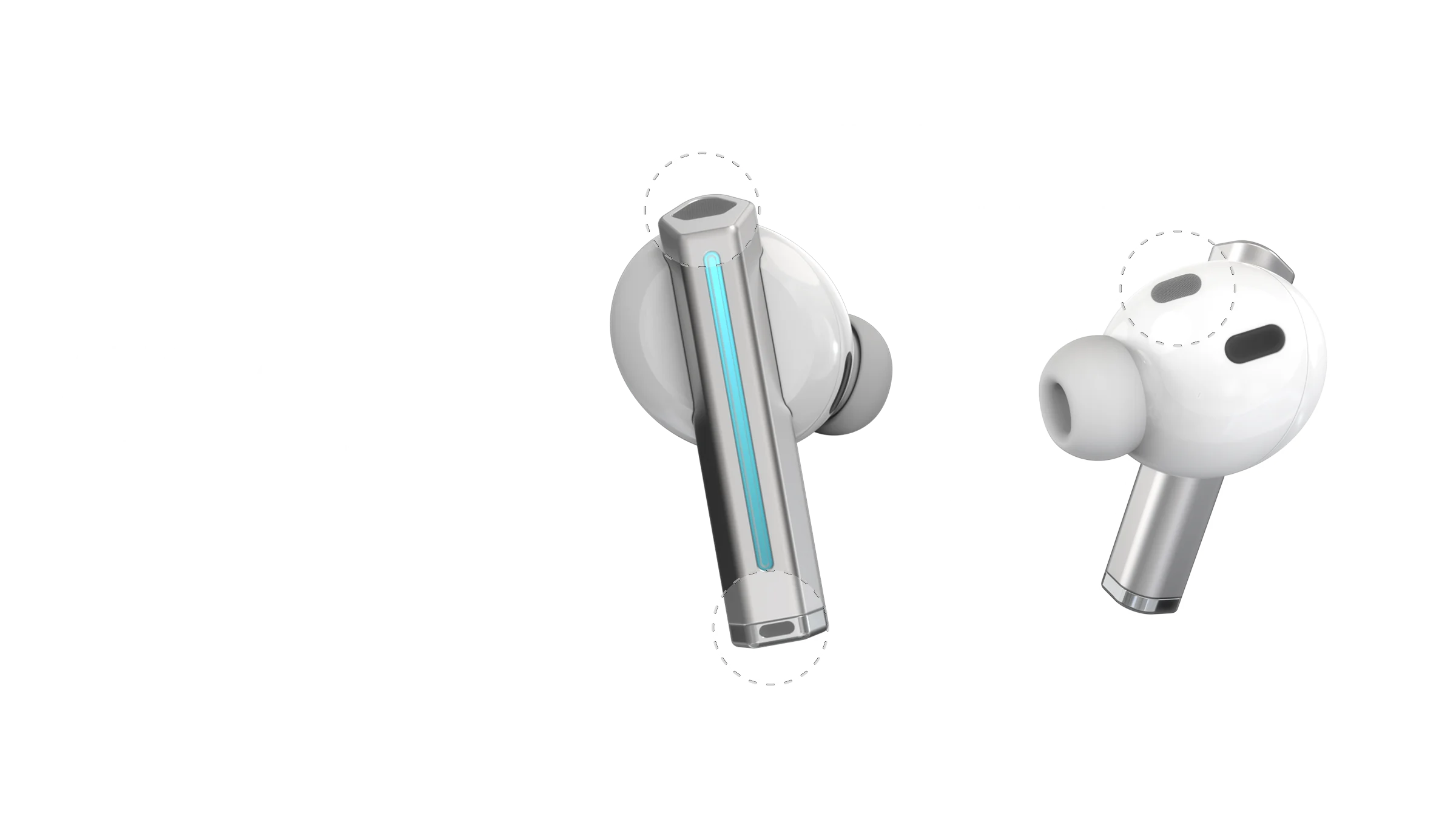

Aura Buds: sensing and 100 Hz audio in a familiar form

Aura Buds product render

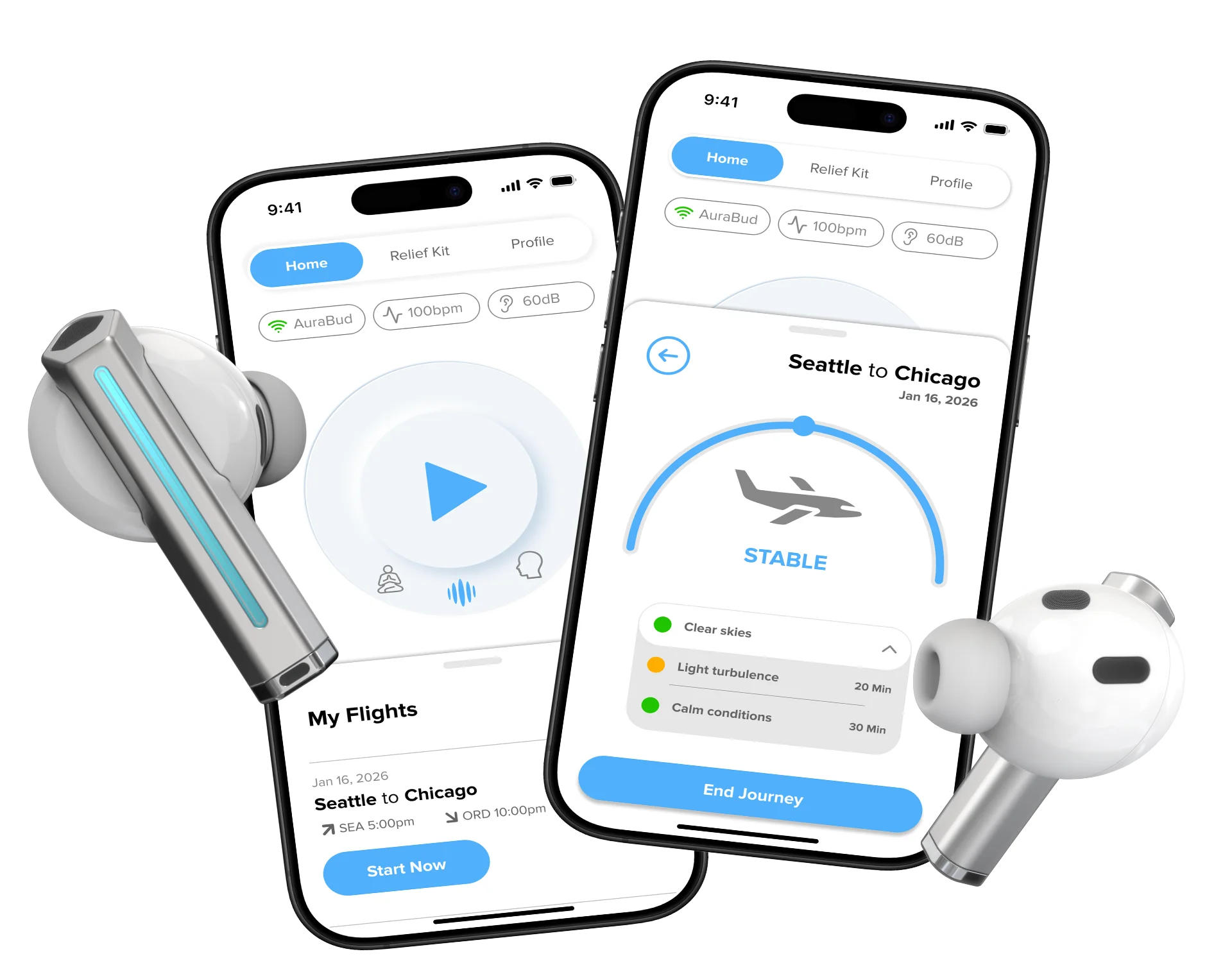
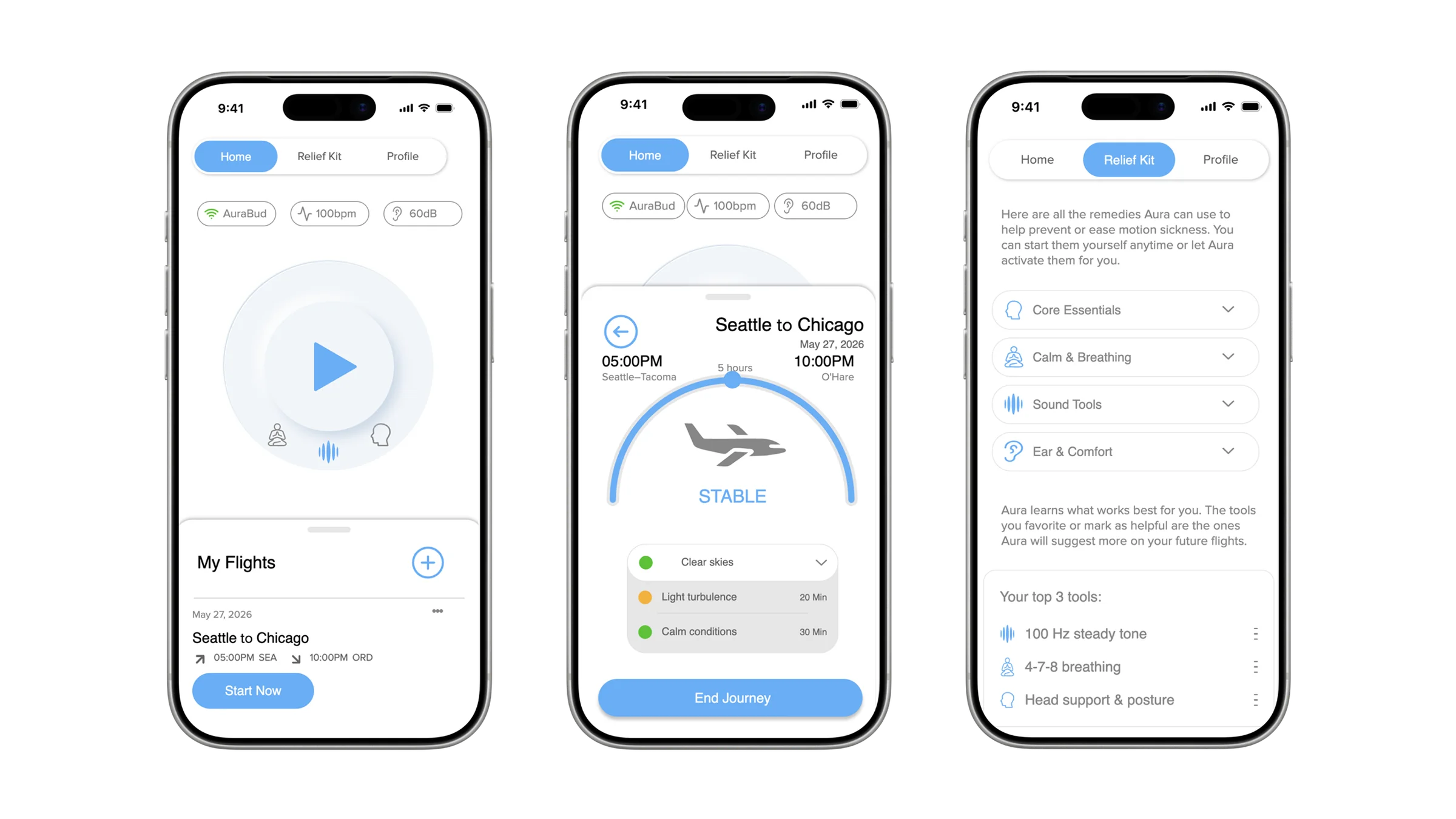
The app: quiet preparation and status at a glance

Aura app interface showing setup, trip context, support preferences, and at-a-glance status

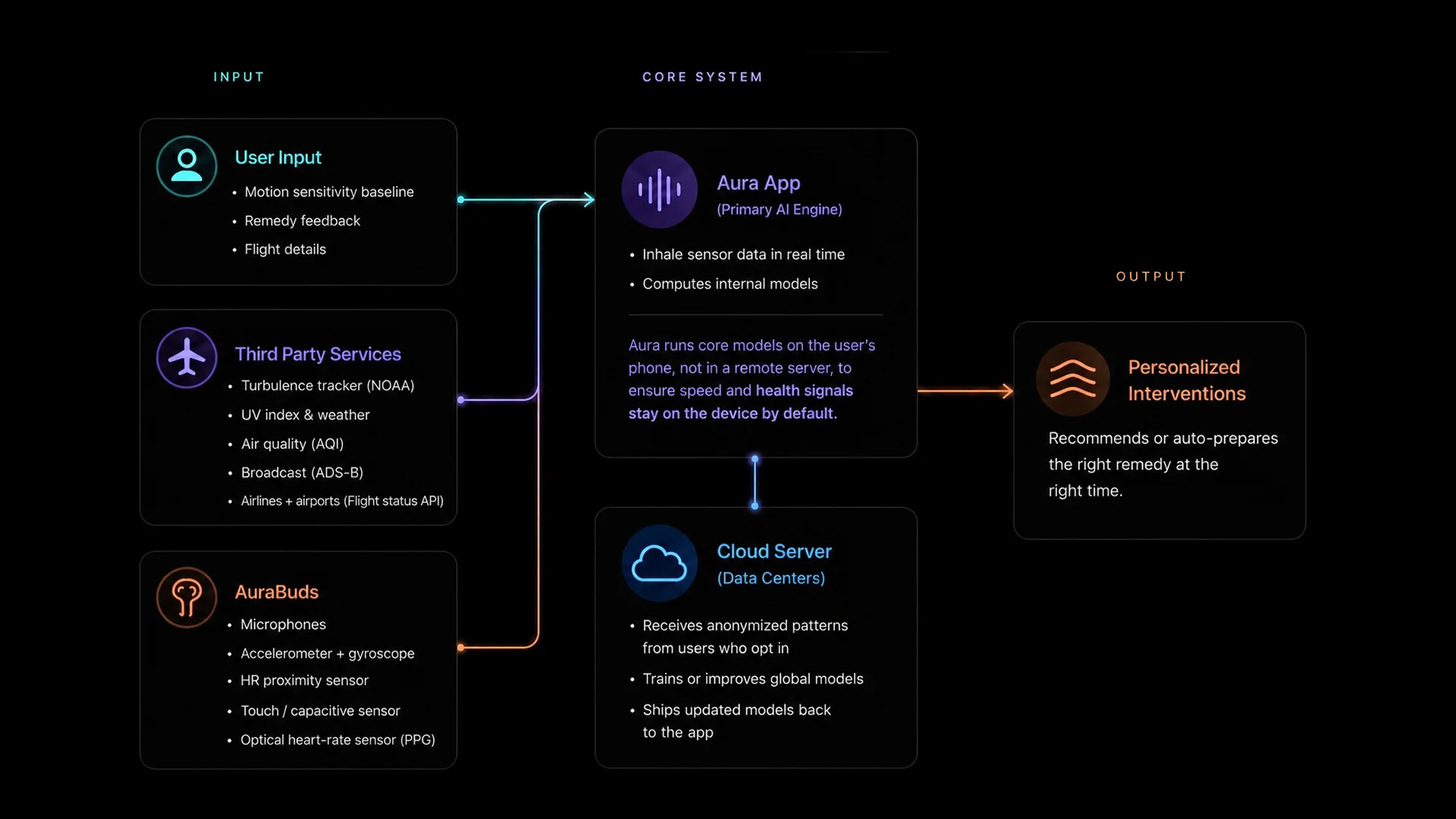
The adaptive system: sensing, prediction, and support working as one

Aura system architecture

Situation

Travel was rich, but too broad to solve as one problem

An open brief led us to travel: emotionally rich, physically demanding, and full of unresolved friction. But travel is too broad to solve as one problem. Planning, airports, flying, and recovery each carry different needs and constraints.

Our first job was narrowing: finding the one moment in the journey where a product could matter most.

Discovery

We narrowed the journey to the moment with the least control

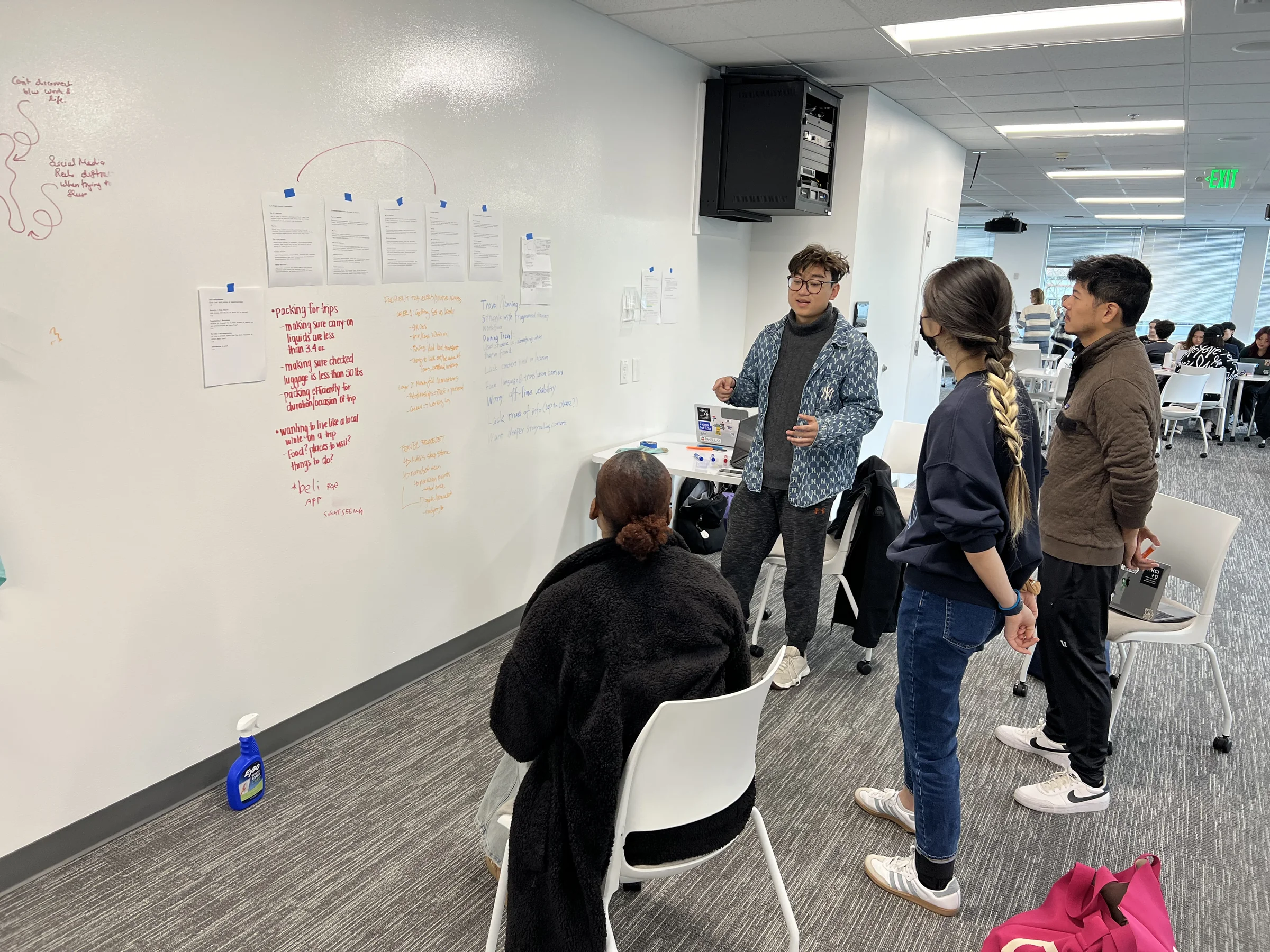
We broke the journey into three phases, before, during, and after travel, then compared where discomfort was most intense and traveler control was lowest.

The team at the whiteboard during discovery: interview notes pinned above handwritten clusters on packing, planning, and in-flight discomfort, with Malik talking the group through them
Discovery session: sorting interview notes into packing, planning, and in-flight discomfort on the whiteboard

In-flight motion sickness stood out: high discomfort, low control. Travelers can’t change their environment, stop moving, or recover once symptoms begin.

Decision: Narrow Aura from a general travel concept to an in-flight support system for motion-sensitive travelers.

Design Requirements

01

Earlier Than Symptoms

Support before nausea becomes hard to manage.

02

Low-Effort in Use

Works quietly without adding another task.

03

Built on Familiar Behavior

Fits existing travel habits like earbuds and audio.

04

Calm by Default

Feels subtle, reassuring, and non-alarming.

05

Socially Wearable

Discreet and comfortable enough for public travel.

Research

Existing support often arrives after travelers already feel sick

Motion Sickness Is a Timing Problem

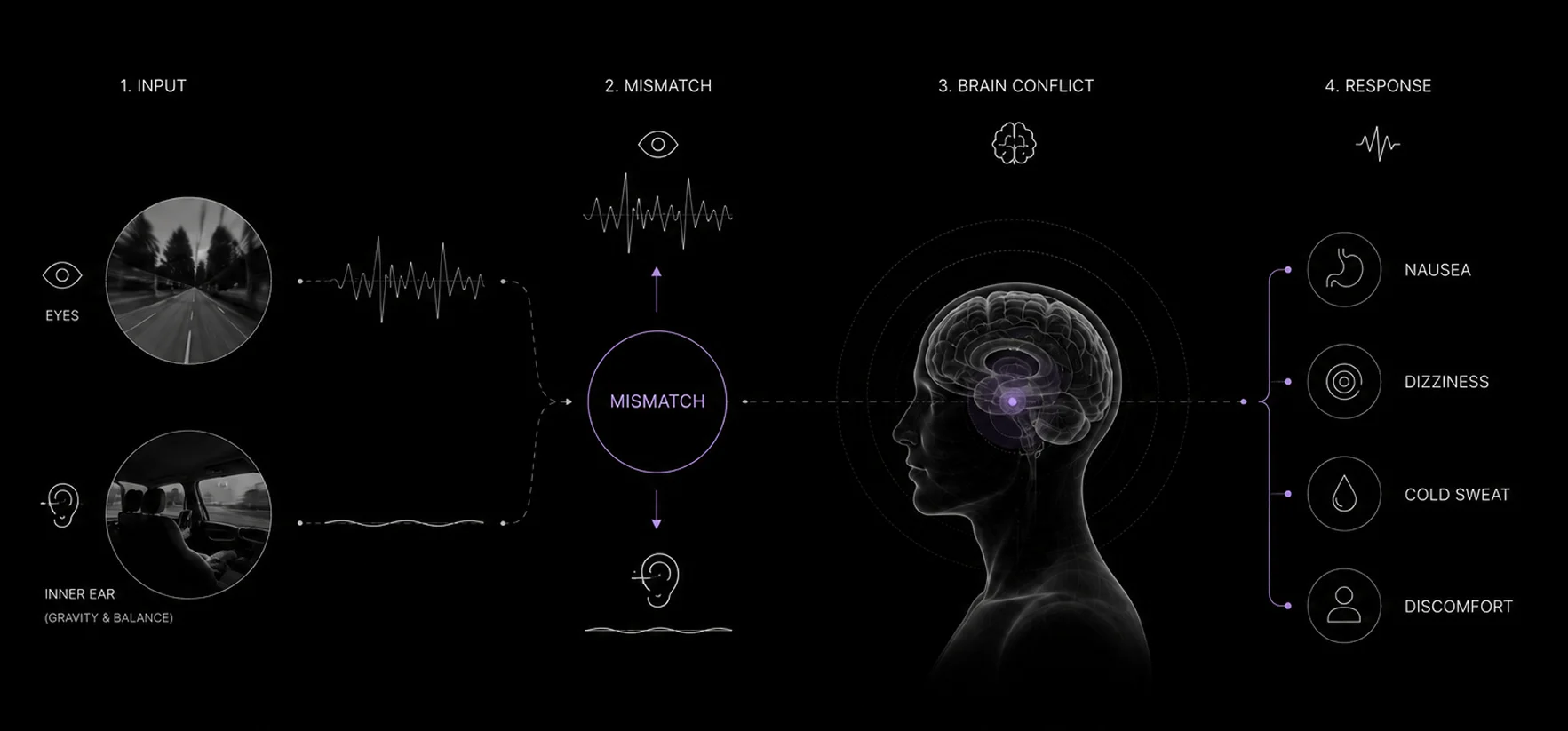
Secondary research reframed the problem: motion sickness is not a sudden symptom but a gradual response to conflict between visual and vestibular signals. The body reacts before the mind notices, so waiting until users feel nauseous is already too late.

Motion sickness mechanism showing visual and inner-ear mismatch, brain conflict, and symptoms

Decision: Support should begin before discomfort becomes difficult to manage.

Audio as Intervention

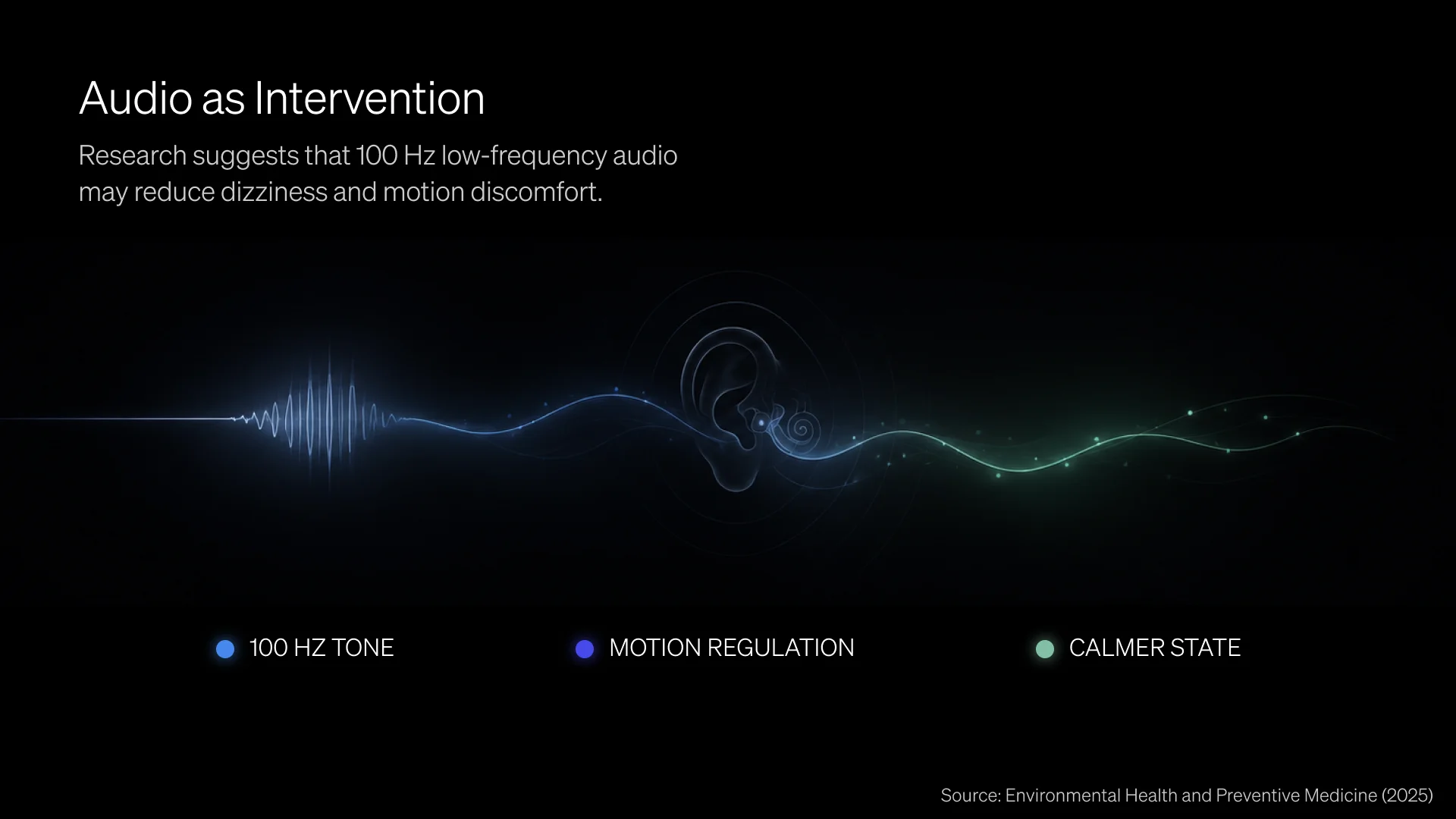
Research identified 100 Hz low-frequency audio as a credible way to reduce dizziness, a passive support that works while sitting still or with eyes closed.

Aura audio intervention research: 100 Hz sound

Design implication: Make calming audio Aura’s first response, with no visual attention or active input required.

The Gap in Existing Solutions

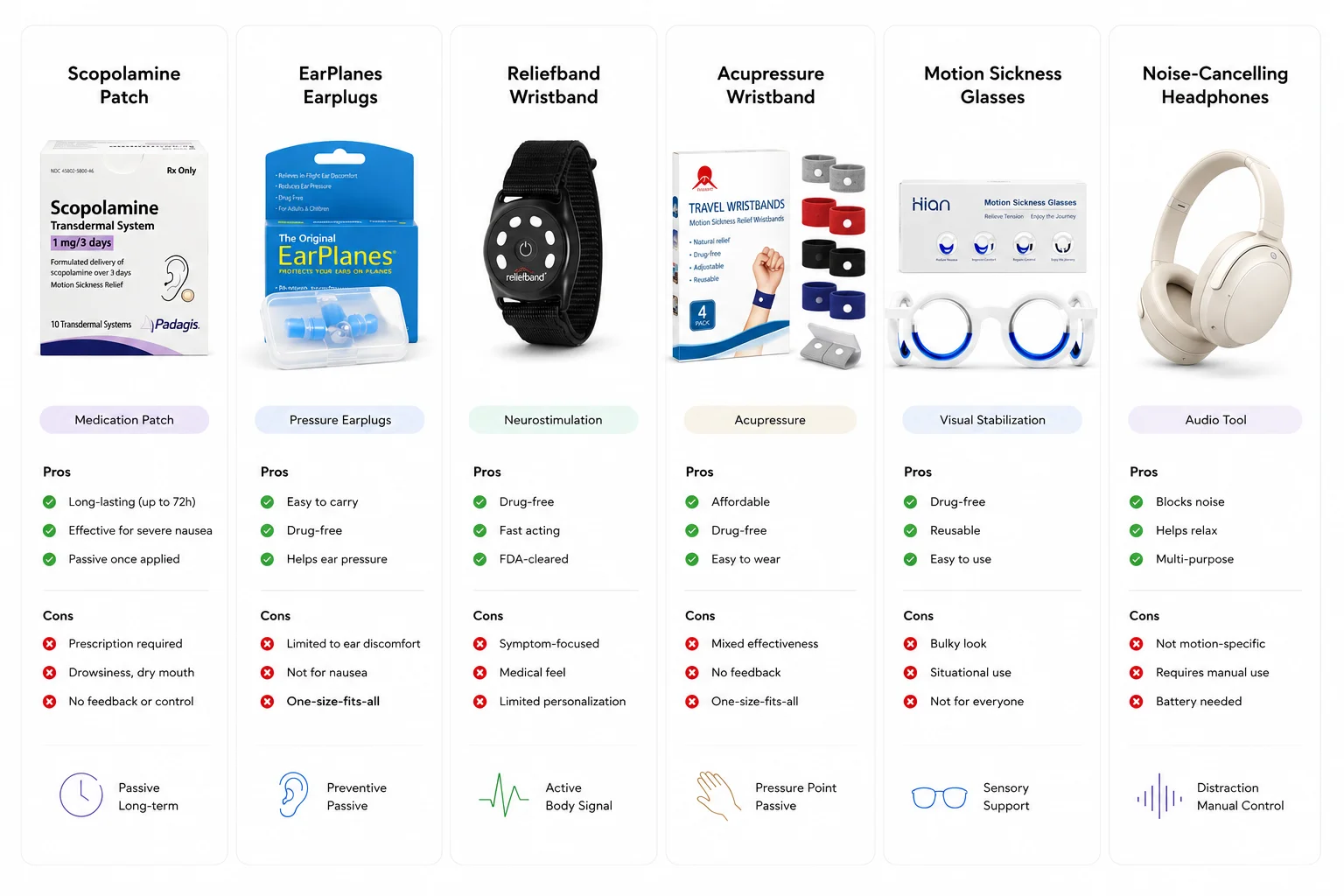
Comparing remedies across medication, patches, wearables, pressure tools, and behavioral strategies revealed a shared weakness: nearly all require advance preparation or active self-management after discomfort begins. Few support the early buildup phase, when travelers need help but may not yet recognize it.

Aura competitive analysis: motion sickness solutions

Insight: Aura’s opportunity was not relieving nausea. It was anticipating discomfort.

Ideation

Aura needed to combine sensing, intervention, and familiar travel behavior

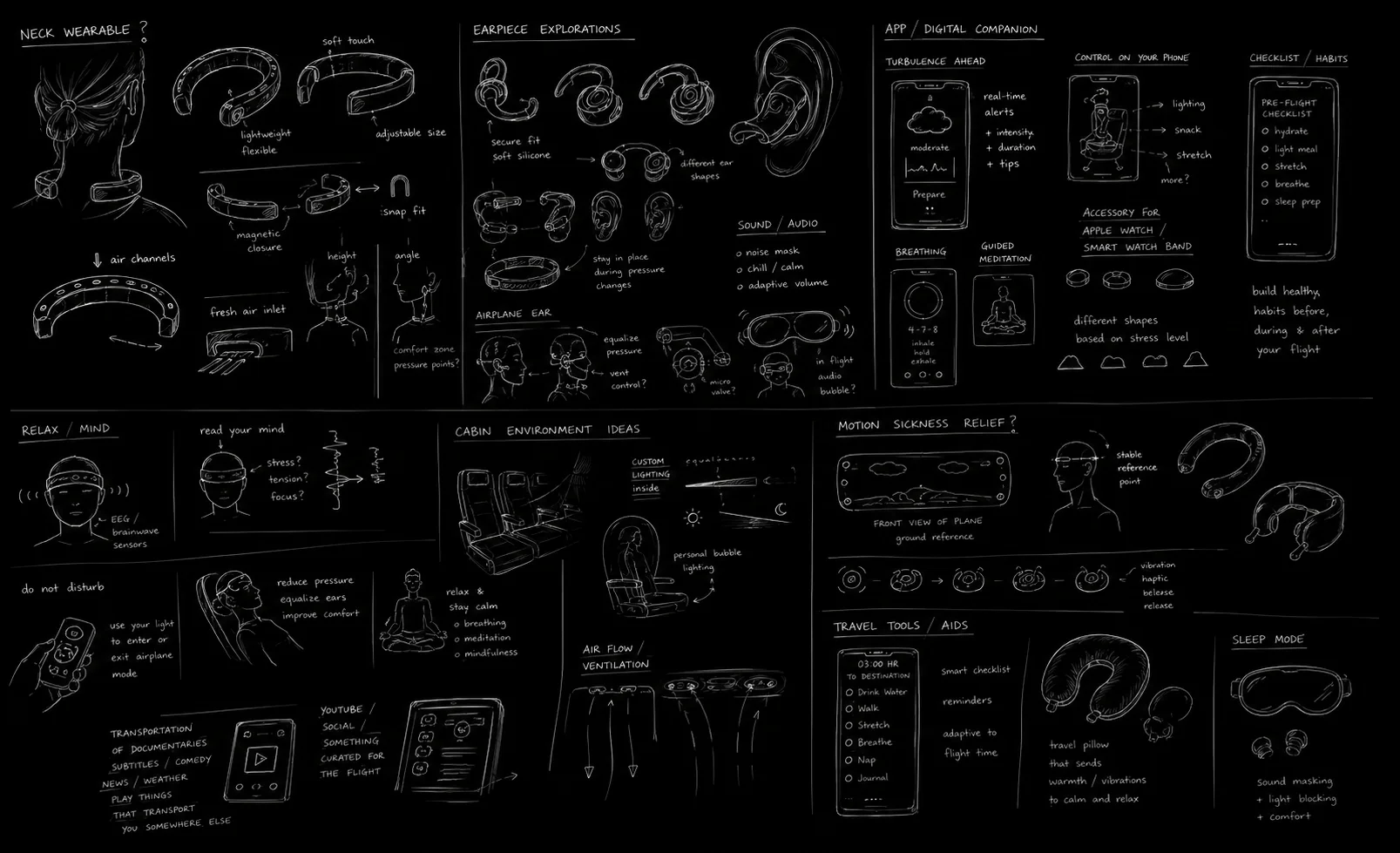
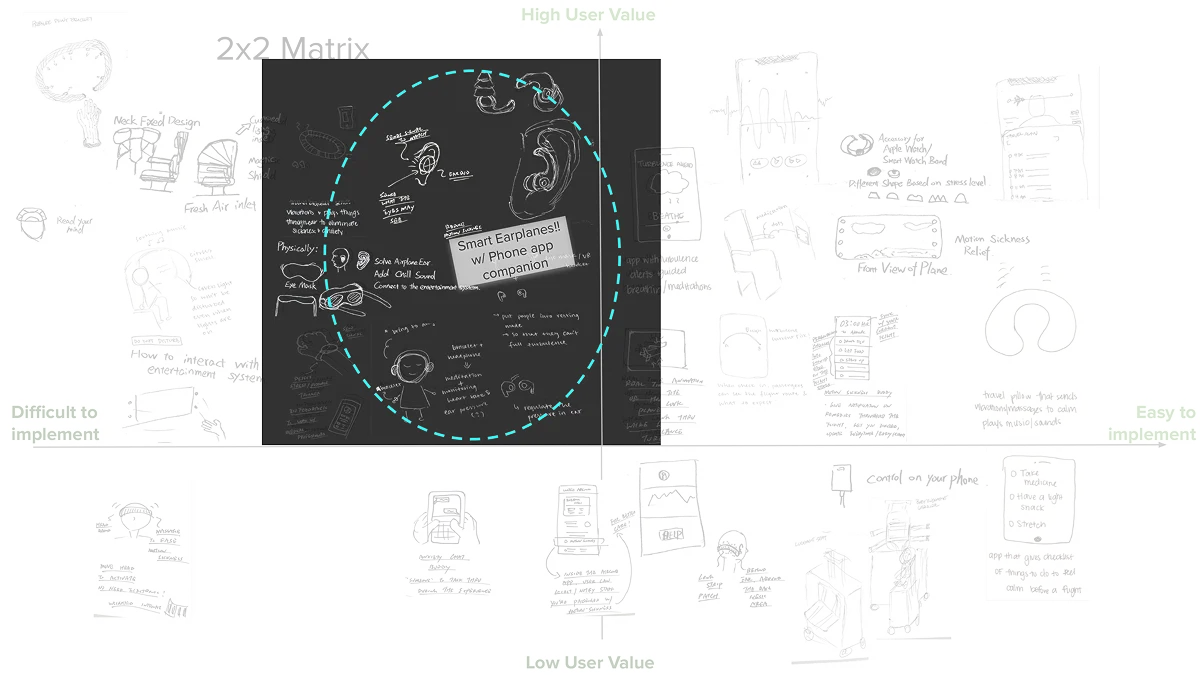
I sketched broadly across levels of intervention, keeping the field open before narrowing: app guidance, pressure wearables, visual reduction tools, environmental supports, and audio concepts.

Aura ideation overview showing early concepts across digital, physical, and sensory interventions

A 2×2 of user value against feasibility exposed the core tradeoff: concepts that were easy to build depended on user action, while passive physical remedies lacked the sensing needed for proactive support. Only an ear-worn wearable could deliver both.

Aura 2 by 2 concept evaluation matrix showing the selected ear-worn wearable direction

Why I pushed for the earbud direction

01

Wearability

Earbuds stay close to the body, making them suitable for sensing early signals and delivering support in the moment.

02

Social Acceptance

Earbuds are already familiar in public travel, making Aura feel less like a medical device or speculative gadget.

03

Beyond Travel

The direction had room to extend beyond flights into broader moments of motion discomfort.

04

100 Hz Audio Intervention

The research made audio more than a calming feature. It gave Aura a credible intervention mechanism.

Decision: Focus on an audio-first wearable that senses early risk, interprets flight context, and intervenes quietly before symptoms escalate.

Testing

The product had to earn trust on the body

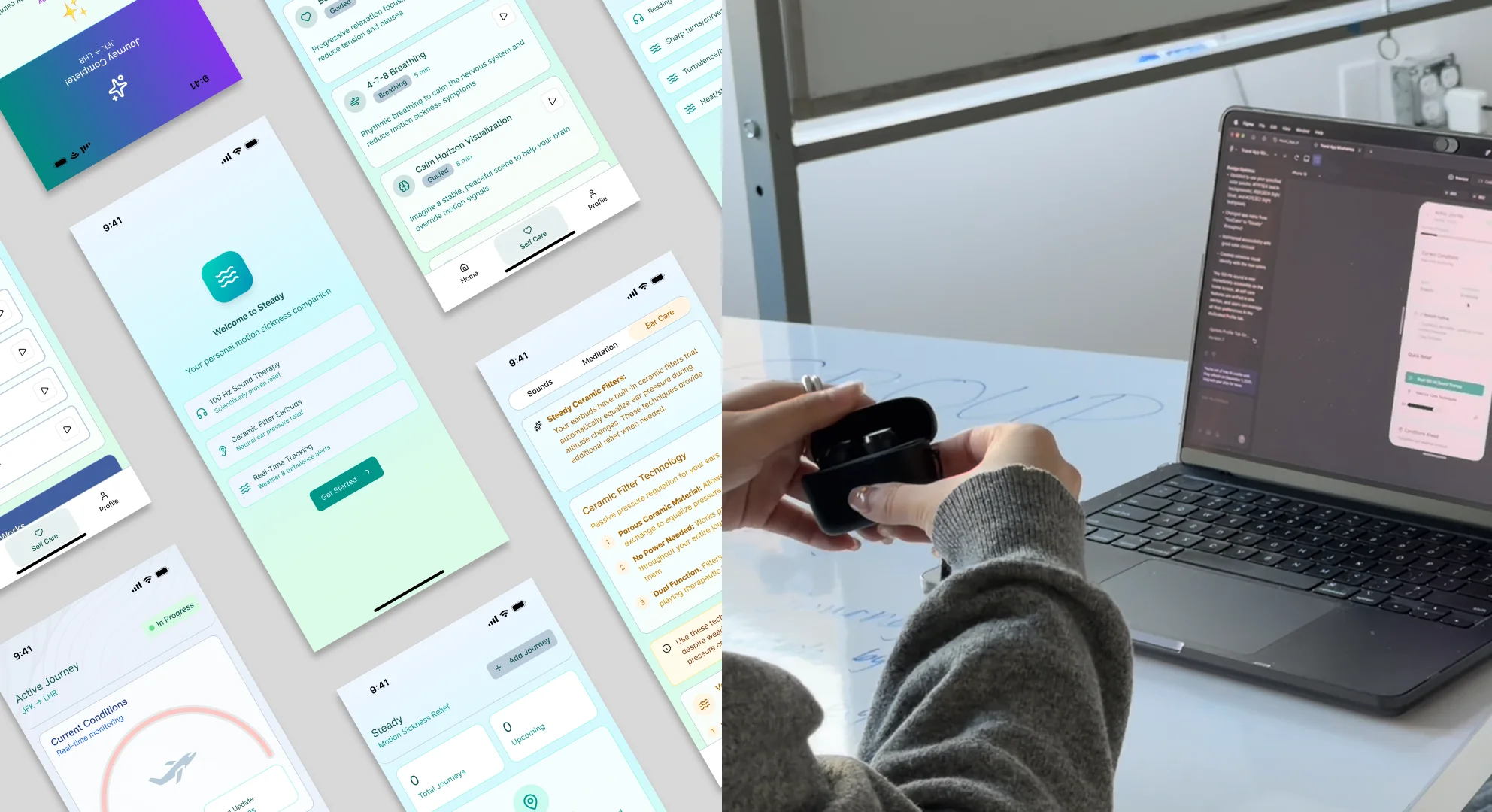
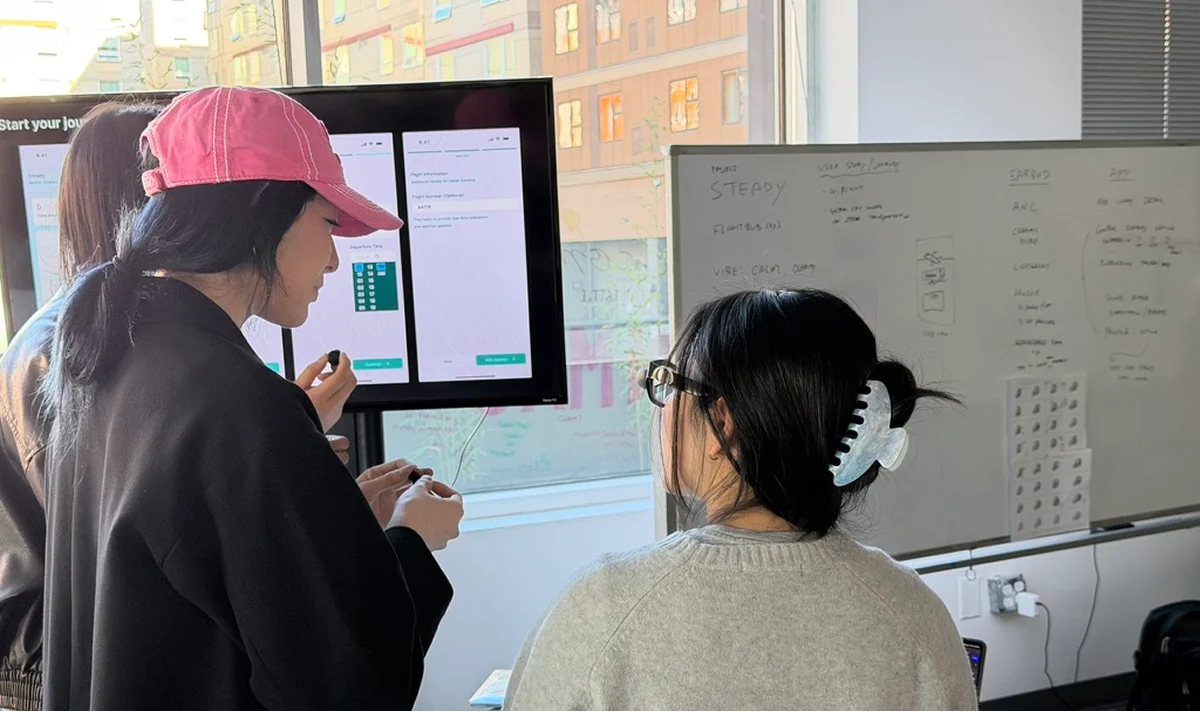
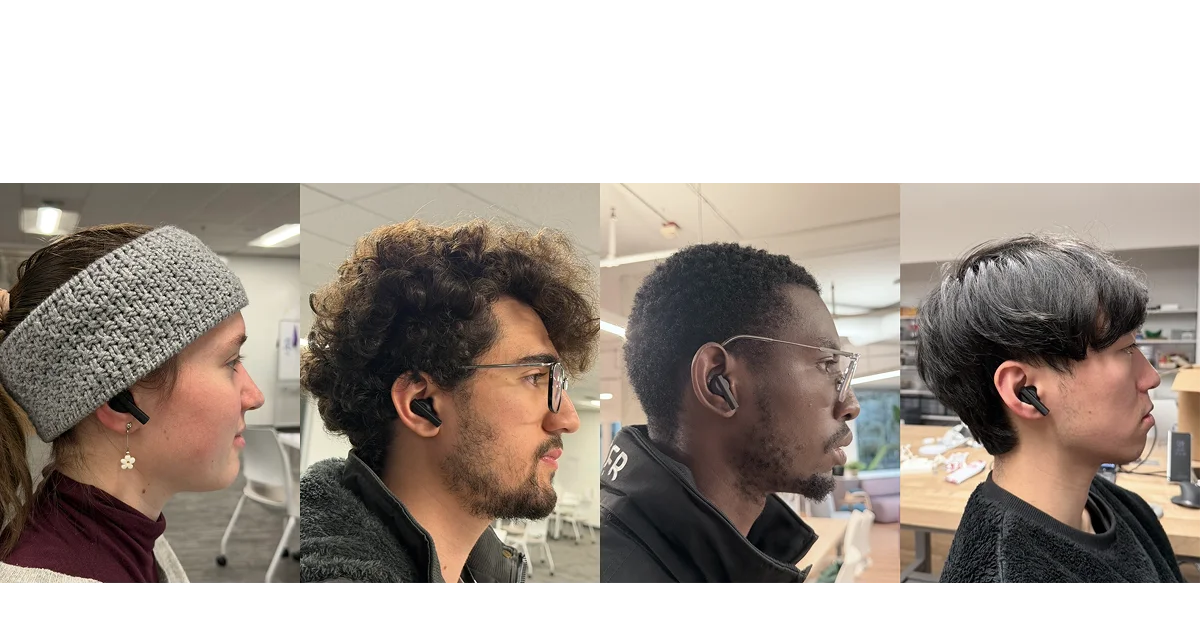
I led the physical prototyping while teammates built the digital flow, then we tested the combined hardware and app experience with users for fit, stability, comfort, and system clarity.

Aura physical prototyping process and early earbud form exploration
Aura hardware and app experience testing with users

What Testing Revealed

Testing exposed constraints that CAD and static screens had hidden.

01

Fit and Stability

Ear shape, glasses, hairstyles, and head movement affected how securely the buds stayed in place.

02

Weight Distribution

The first in-ear structure felt uneven and less stable during movement.

03

Interaction Clarity

The app needed to communicate status without requiring too much reading or active management.

Decision: Shift the hardware toward a more stable bar-oriented structure and simplify the app around low-attention status feedback.

Refinement

Wearability and readability became part of the system

Physical Refinement

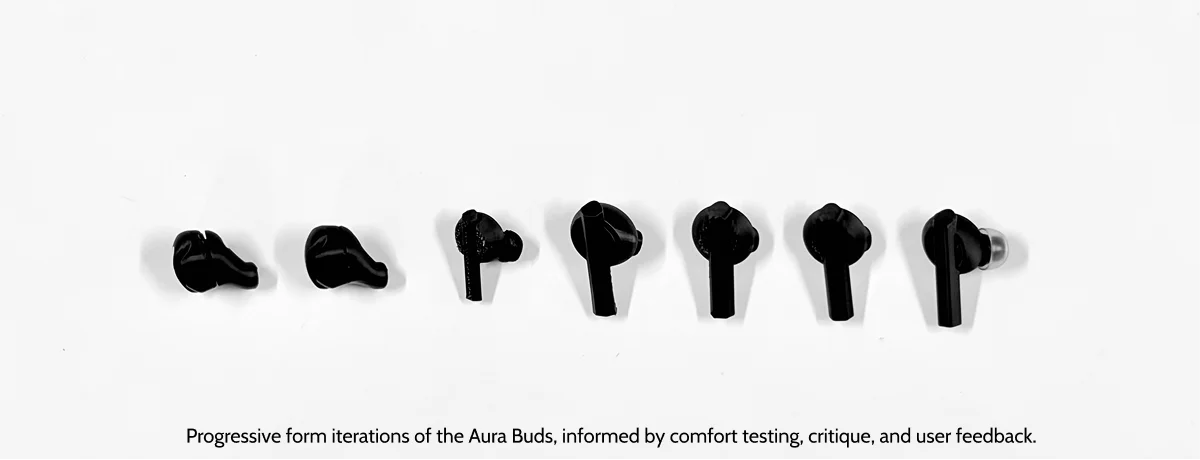
Ergonomic testing revealed fit, pressure, and weight issues across different ear shapes, glasses, hairstyles, and head movement.

Progressive Aura Bud form iterations informed by ergonomic testing

I shifted the hardware toward a bar-oriented structure: more stable, more even weight distribution, more internal room for sensing and audio components.

Validated with 16 people, and 93.75% preferred the refined earbud form.

Aura Bud ergonomic testing across different users and wearing contexts

Digital Refinement

Aura app interface refinement for low-attention status feedback

I simplified the interface around low-attention feedback: clearer status cards, calmer motion states, and direct cues showing when Aura is monitoring, preparing, or intervening.

Decision: Refine Aura as one connected hardware and app experience, more stable to wear, easier to read, and easier to trust.

Final Design

Aura senses, predicts, and supports before discomfort takes over

A Connected System for Proactive Support

The final concept works in three layers: Aura Buds capture early body and motion signals, the app interprets them with travel context, and the system responds with subtle audio guidance, before the traveler has to actively manage symptoms.

Aura system architecture

System logic: Aura doesn’t wait for users to report discomfort. It prepares support early, so the experience feels timely, calm, and low-effort.

In-Flight Experience

I mapped Aura across pre-travel preparation, in-flight monitoring, and turbulence response to define its tone: proactive but not alarming, explaining enough to build trust without demanding attention.

Decision: Design Aura’s support as quiet preparation, not urgent correction.

Aura Buds

Hardware System

Aura Buds product render
Aura Buds detail
Aura Buds interaction

Sense

HR, HRV, motion, proximity

Predict

Early motion-sickness risk

Support

100 Hz tone, breathing guidance, soundscapes

Signal

At-a-glance wellness status

The buds sense physiological and motion signals, deliver 100 Hz grounding audio and calming soundscapes, and give low-attention feedback through subtle cues, familiar enough for travel and with a clear reason to exist beyond everyday earbuds.

Aura App

Aura app interface showing setup, trip context, support preferences, and at-a-glance status

One interaction principle: guided, not demanding. The interface focuses on setup, trip context, support preferences, and at-a-glance status, so users stay informed without managing the system.

Final outcome: A proactive support system, wearable enough for travel, intelligent enough to respond to changing conditions, and calm enough not to overwhelm.

Afterward

Months later, Samsung shipped the same intervention

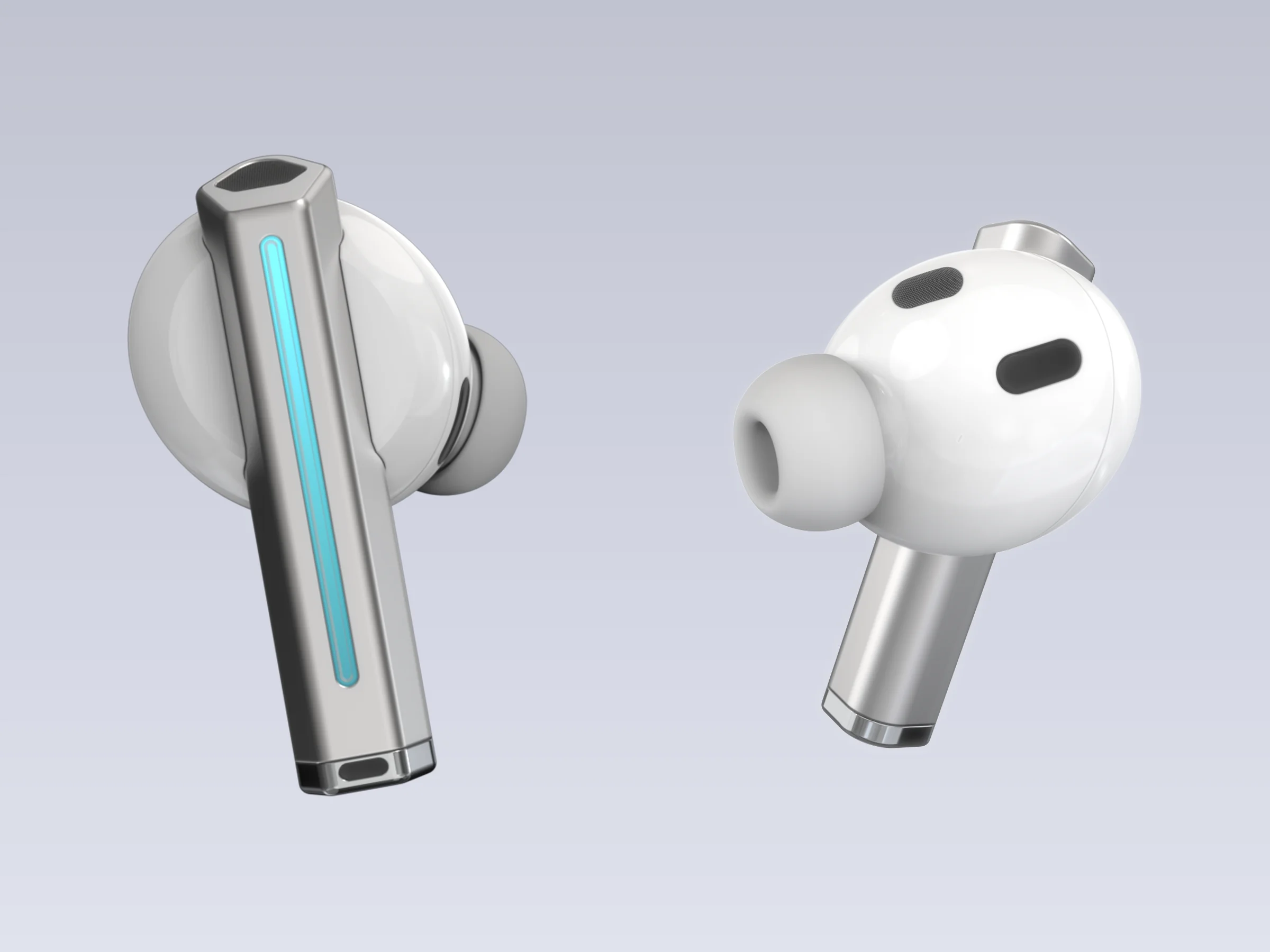
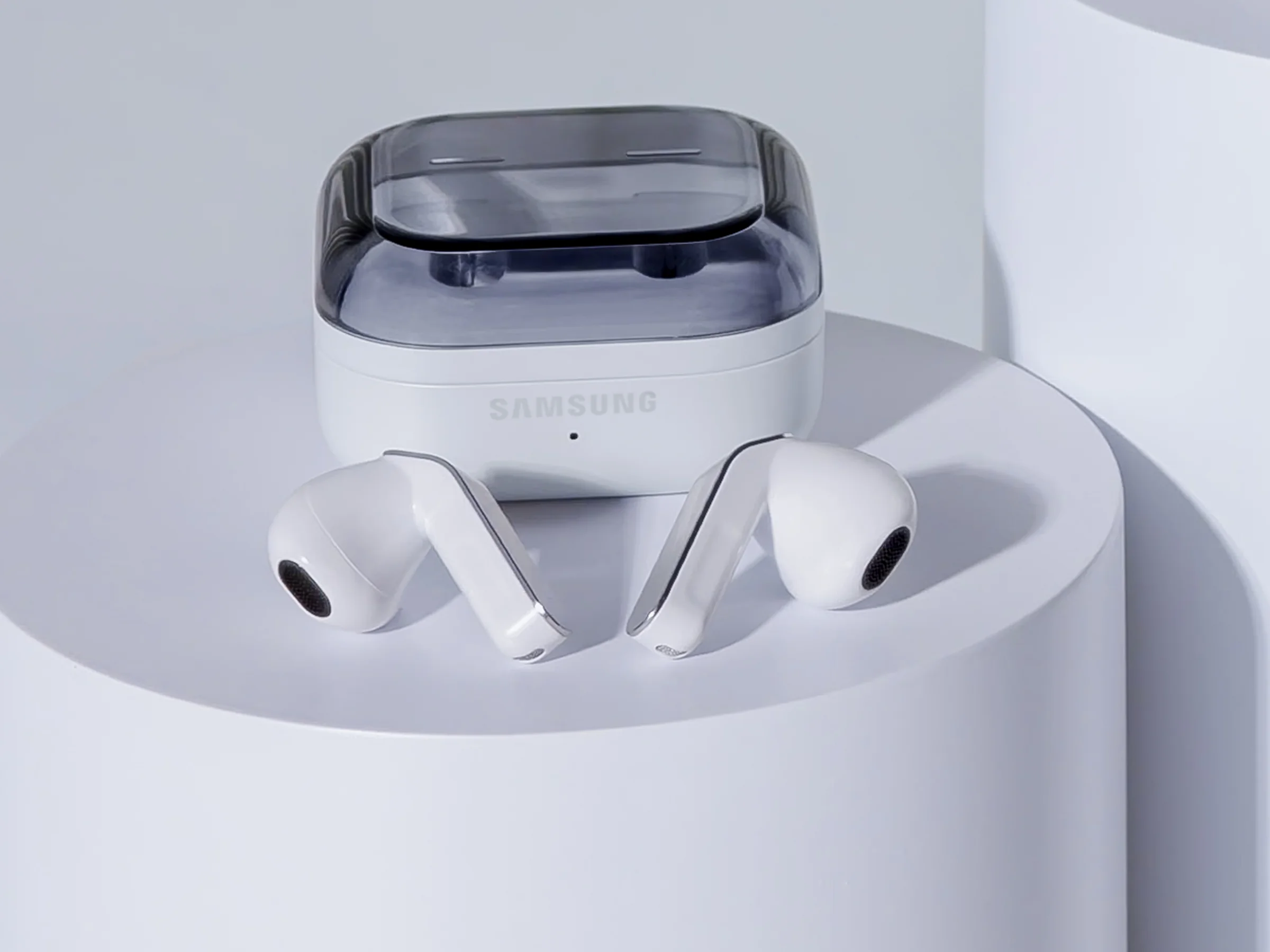
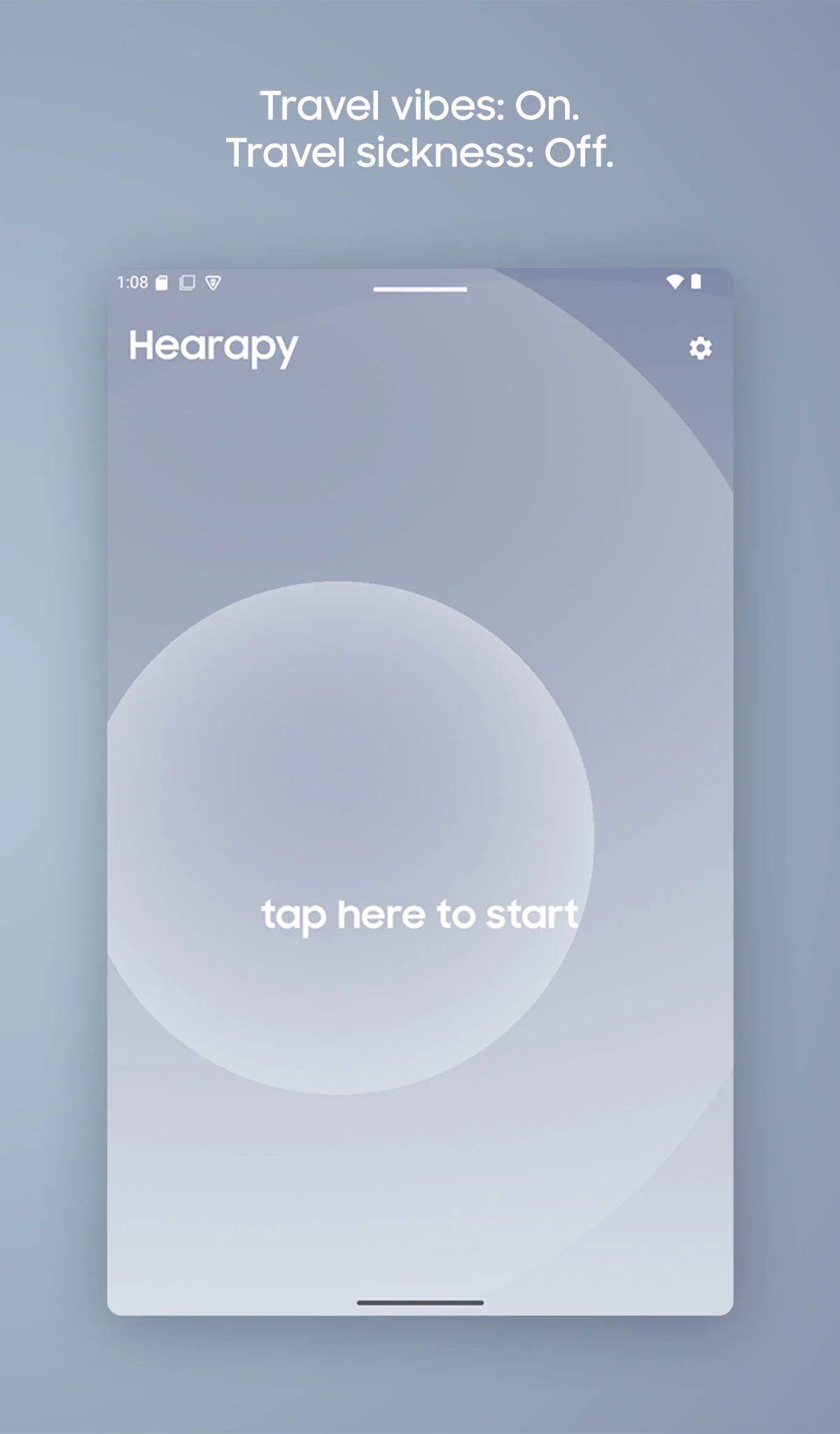
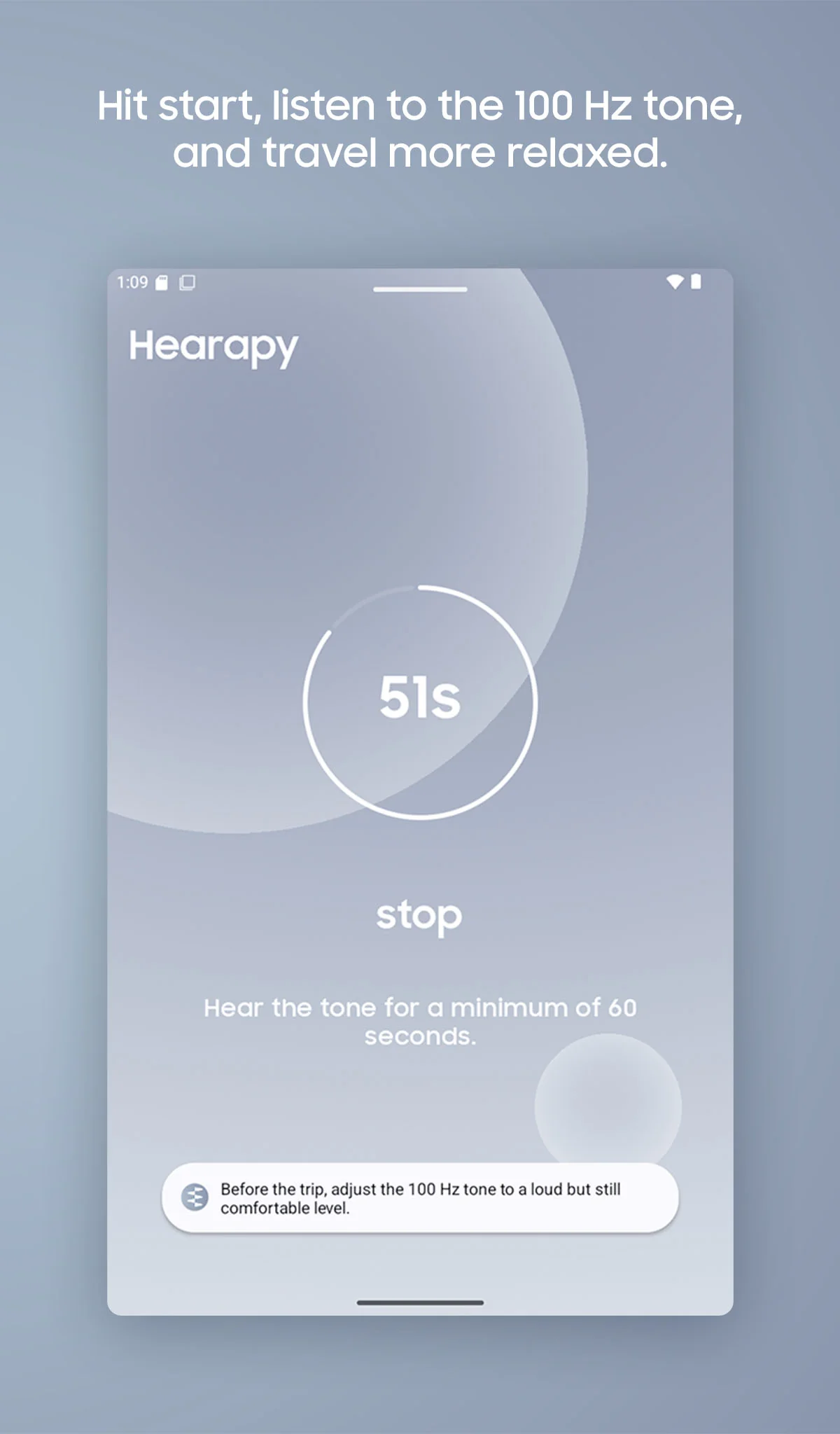
In March 2026, Samsung launched Hearapy, a free app that plays a 100 Hz tone through the Galaxy Buds4 Pro to relieve motion sickness before a trip. It is built on the same 2025 Nagoya University study that Aura’s research cited, delivered through the same form factor, ear-worn buds tuned for low-frequency output, and it reaches one of the largest earbud audiences in the world.

Aura Buds render: two white earbuds, one showing the flat metal stem with its light strip, the other the rounded in-ear body
Aura Buds, Fall 2025: the bar-oriented pair we refined for stability and room for a low-frequency driver
Samsung Galaxy Buds4 Pro press photo: two white stem-style earbuds in front of their open case
Galaxy Buds4 Pro, 2026: the earbud Samsung tuned to reproduce the 100 Hz tone, press image by Samsung
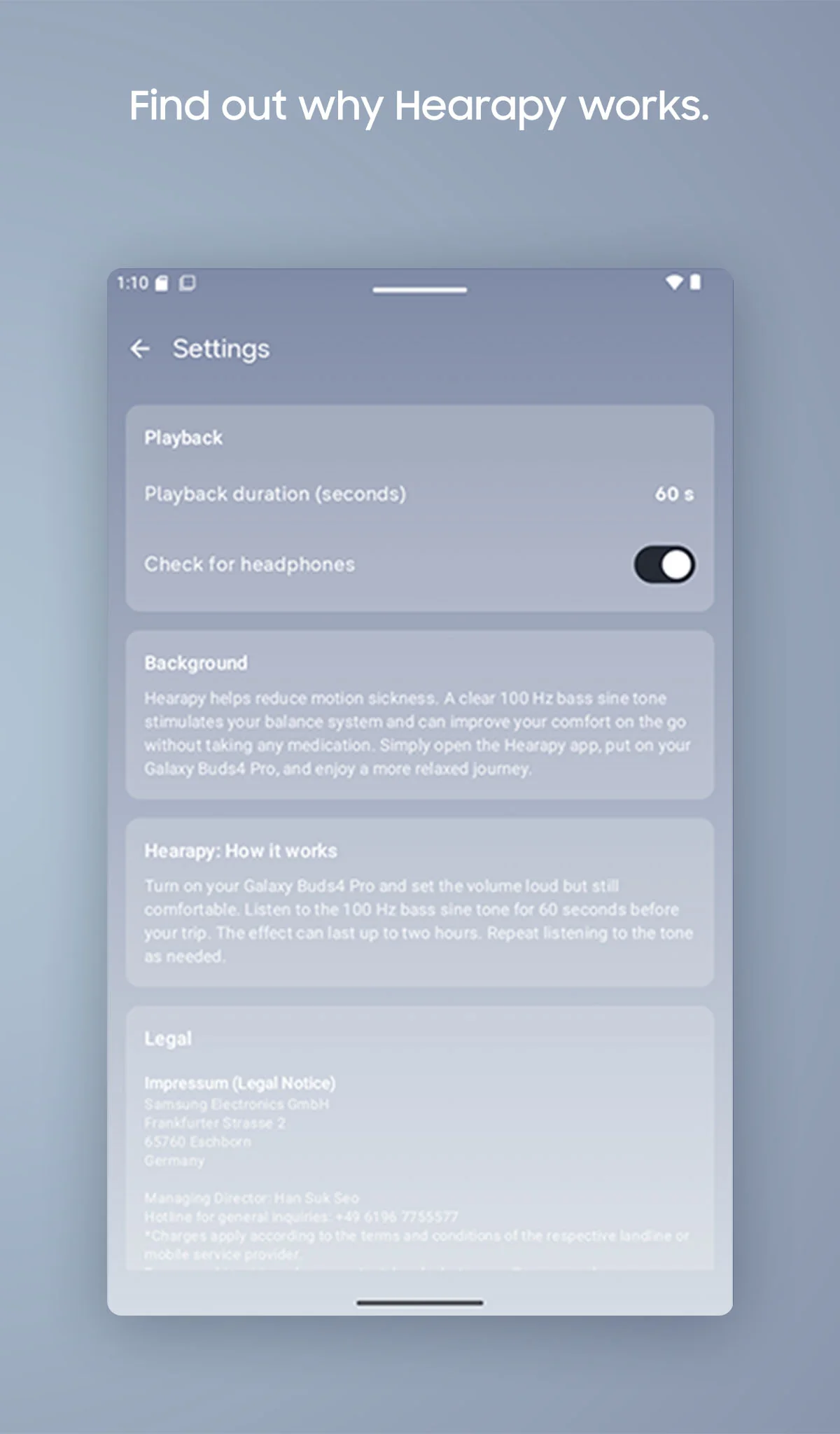
Hearapy start screen: a large circle reading tap here to start
Hearapy running: a 60-second countdown at 51 seconds with a stop control
Hearapy, March 2026: tap to start, hold the tone for 60 seconds, and read why it works, from Samsung’s Google Play listing

Aura

Fall 2025

Samsung Hearapy

March 2026

Team

Five students, five weeks, no lab

Samsung Electronics

Form

Ear-worn buds designed around low-frequency audio

Galaxy Buds4 Pro, with a wider bass driver to reproduce the tone

Intervention

100 Hz tone and calming soundscapes

100 Hz sine tone for 60 seconds, at about 85 dB

Timing

Before symptoms, triggered by sensed risk

Before the trip, started by the user

Evidence

Nagoya University, published 2025

The same study

We did not know Samsung was working on this. Five students, in five weeks, with no lab and no hardware budget, read the same evidence, weighed the same form factors, and arrived at the same answer as a company with the resources to ship it to millions. That is what I take from it: the research and the systems thinking were sound enough to converge with the industry rather than follow it.

Samsung’s launch also shows how far the problem space reaches. Hearapy is a one-minute tone the user starts before travel. Aura goes one step further: it senses risk and times the intervention itself, so the traveler never has to decide when to press play. The demand is now proven at scale. The question Aura was built to answer, when to intervene, is still open.

Reflection

Proactive systems need to earn trust, not just act early

Next Step: From Concept to Evidence

Continuing Aura would mean longitudinal testing across repeated flights and different motion-sickness patterns, shifting the question from whether the concept feels compelling to whether the system senses risk reliably and stays trusted over time.

The conceptual case is made. The next case is evidence.

What I Learned

01

Trust Is an Interaction Design Problem

Aura taught me that proactive systems need more than accurate sensing. Because Aura works before users fully recognize discomfort, trust depends on timing, tone, explanation, and how much control the user keeps.

02

Hardware and Software Should Behave as One System

This project clarified my strength in connecting physical form, digital interaction, and system logic. Aura Buds and the Aura App had to express the same intention: stable to wear, easy to read, and calm in use.

Next up

Oryne

0→1 Product Designer & Builder · 2026App Store
AI-NativeMotion DesignDesign Engineering

Locant

0→1 Product Designer & Builder · 2026GitHub
AI-NativeDesign Engineering

NeuraLyfe

Product Designer, Maker · 2026
Data VisualizationAI-NativePhysical Prototyping