Every Dimension Argues With the Building
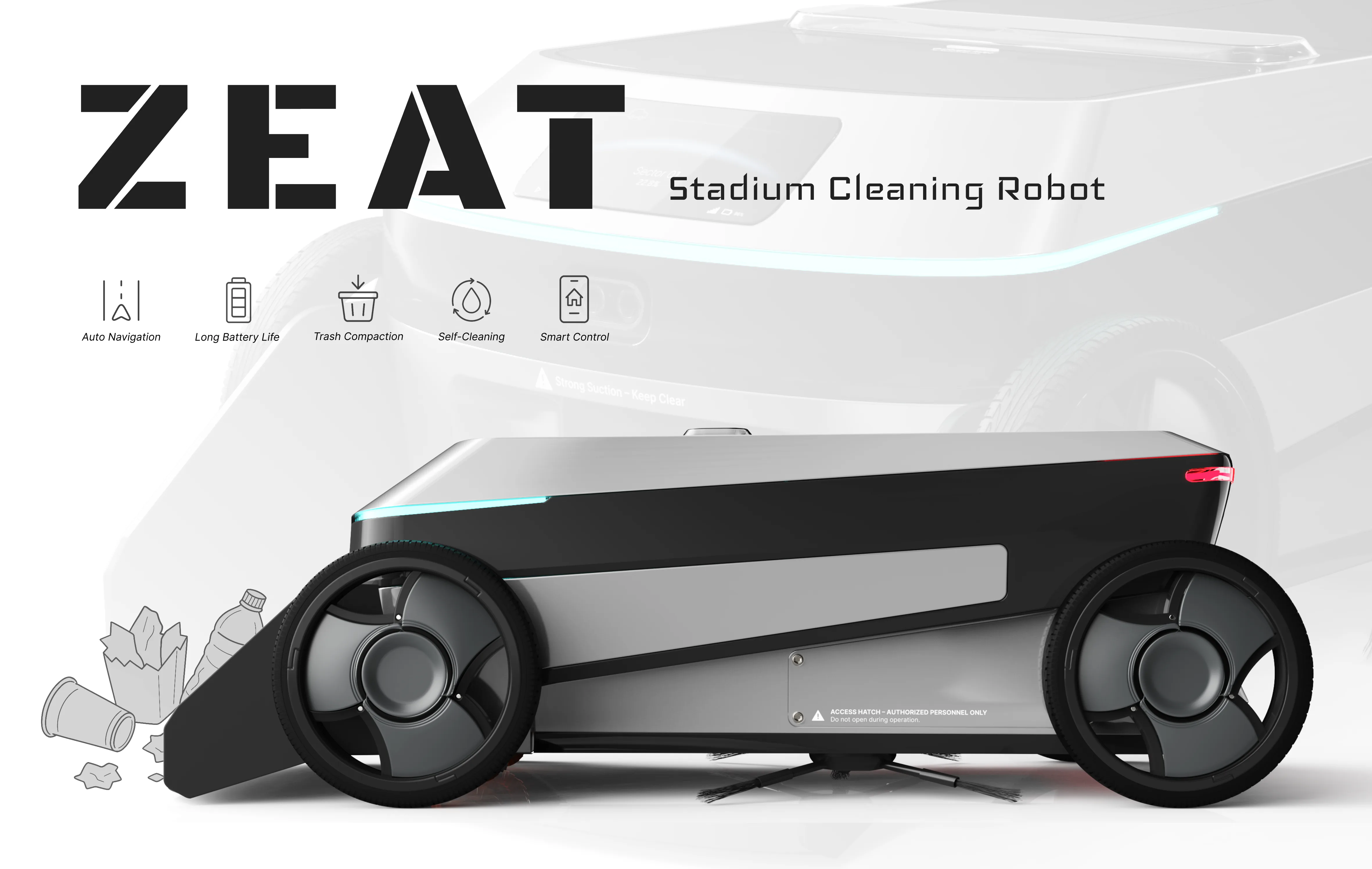
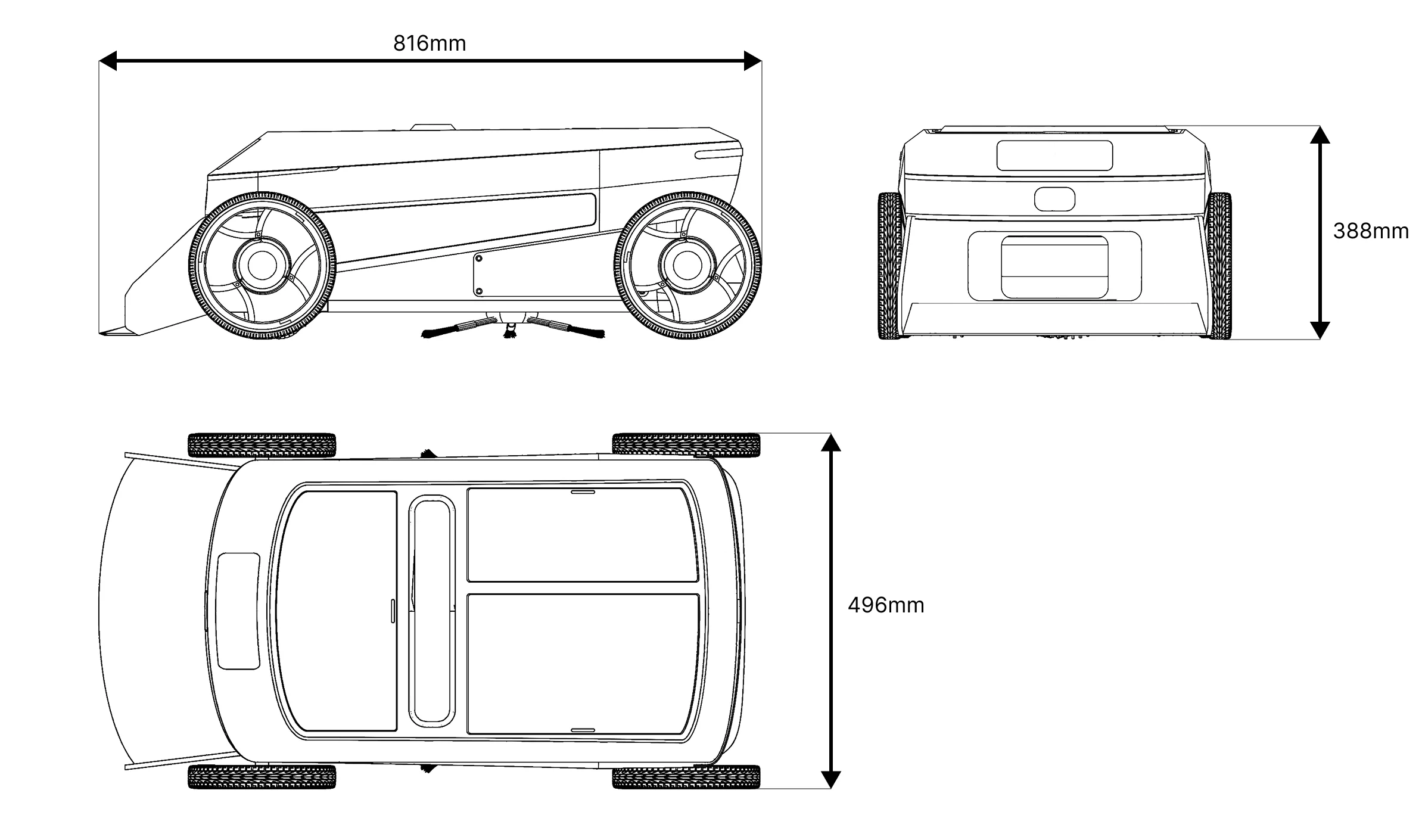
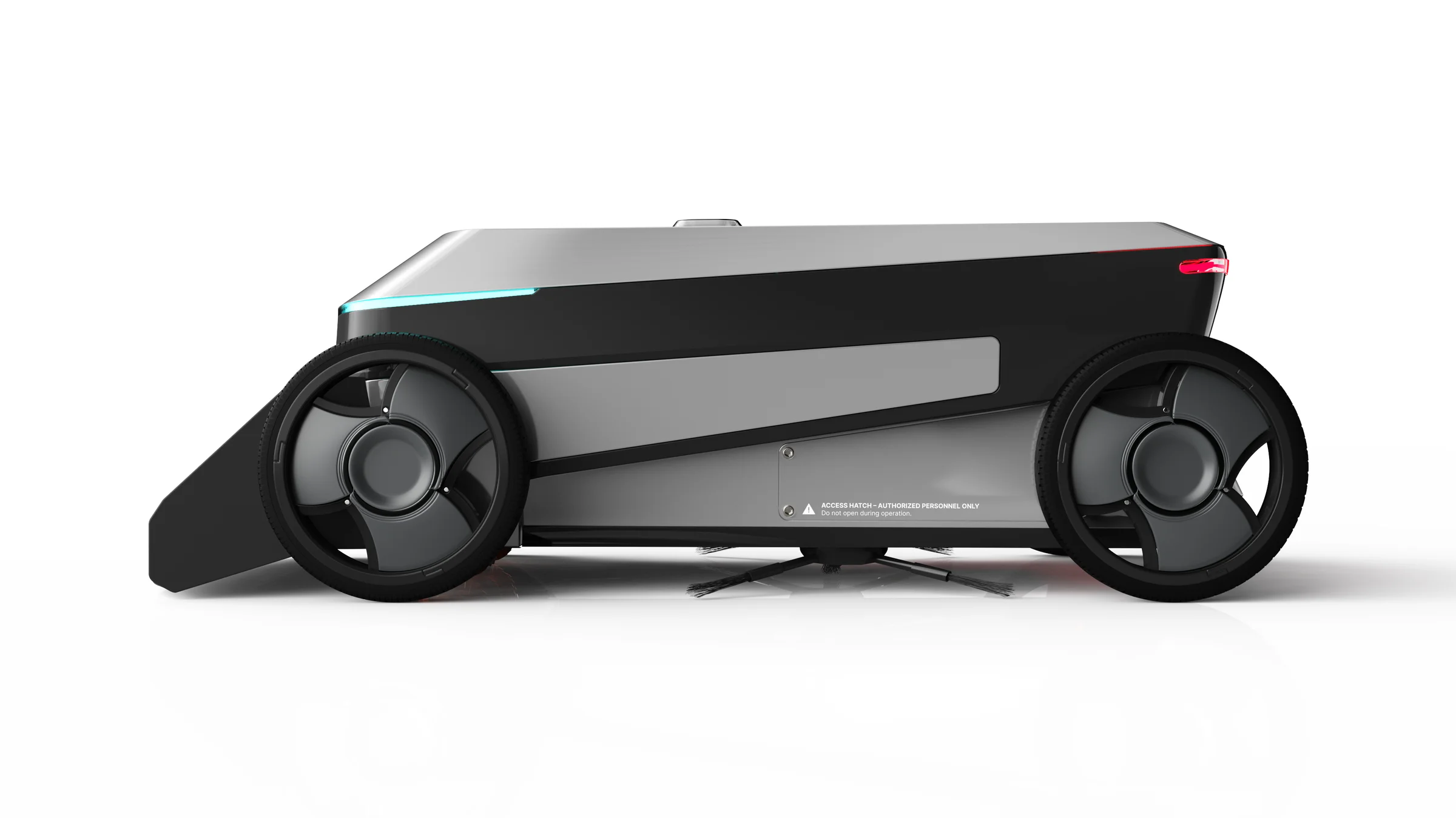
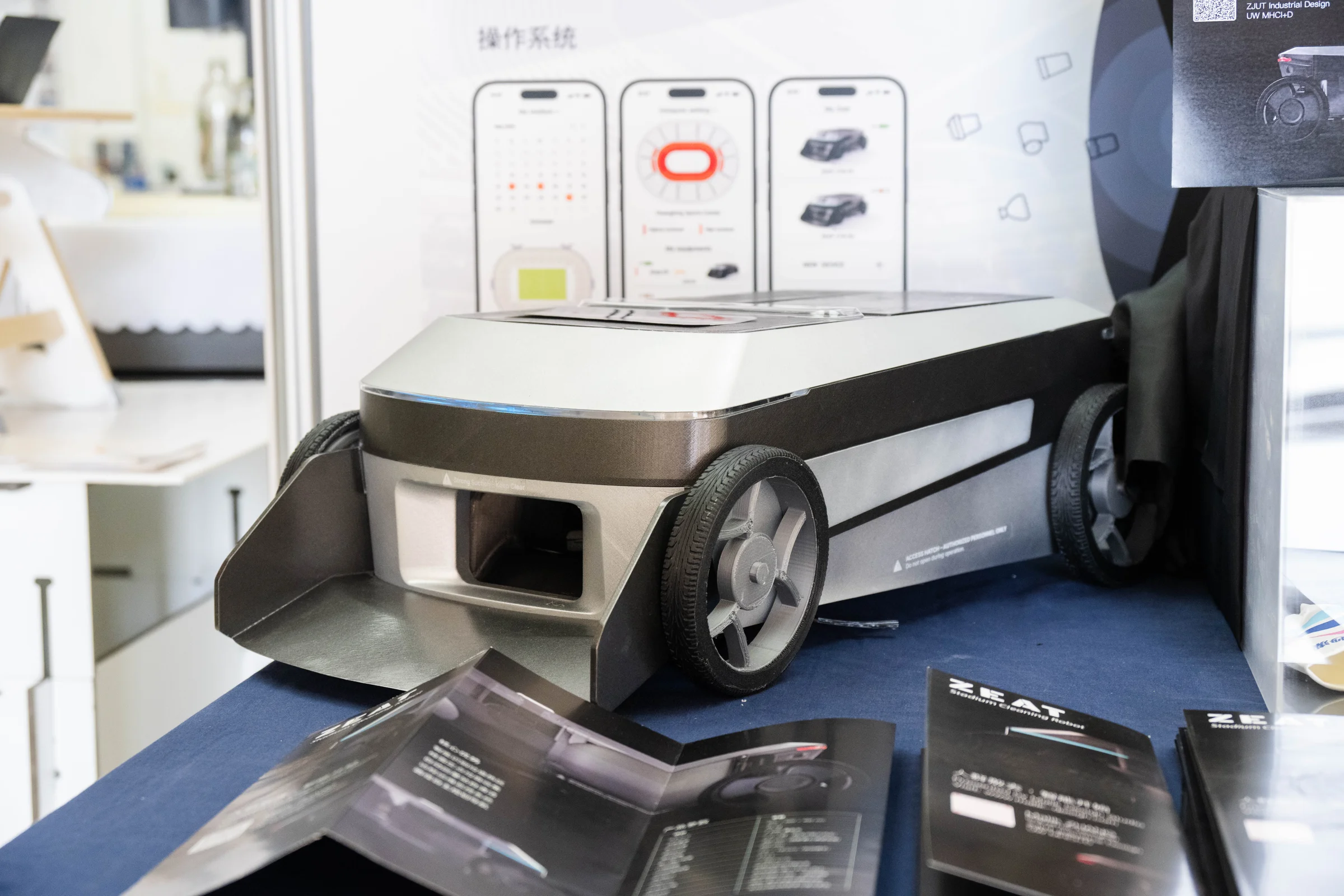
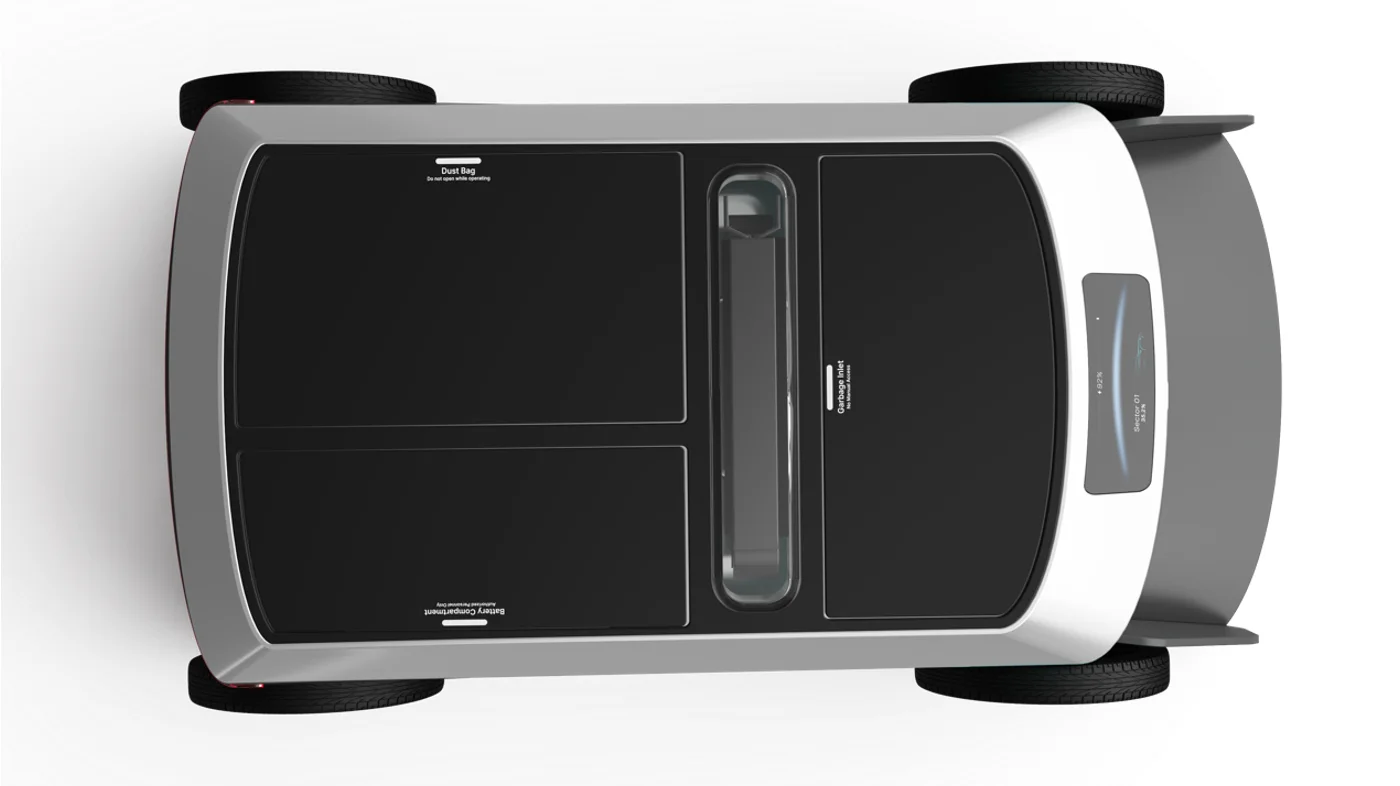
816mm long, 496mm wide, 388mm tall, and none of it arbitrary. Wheelbase from the step geometry, height from seat clearance, width from how much floor one pass should clean.
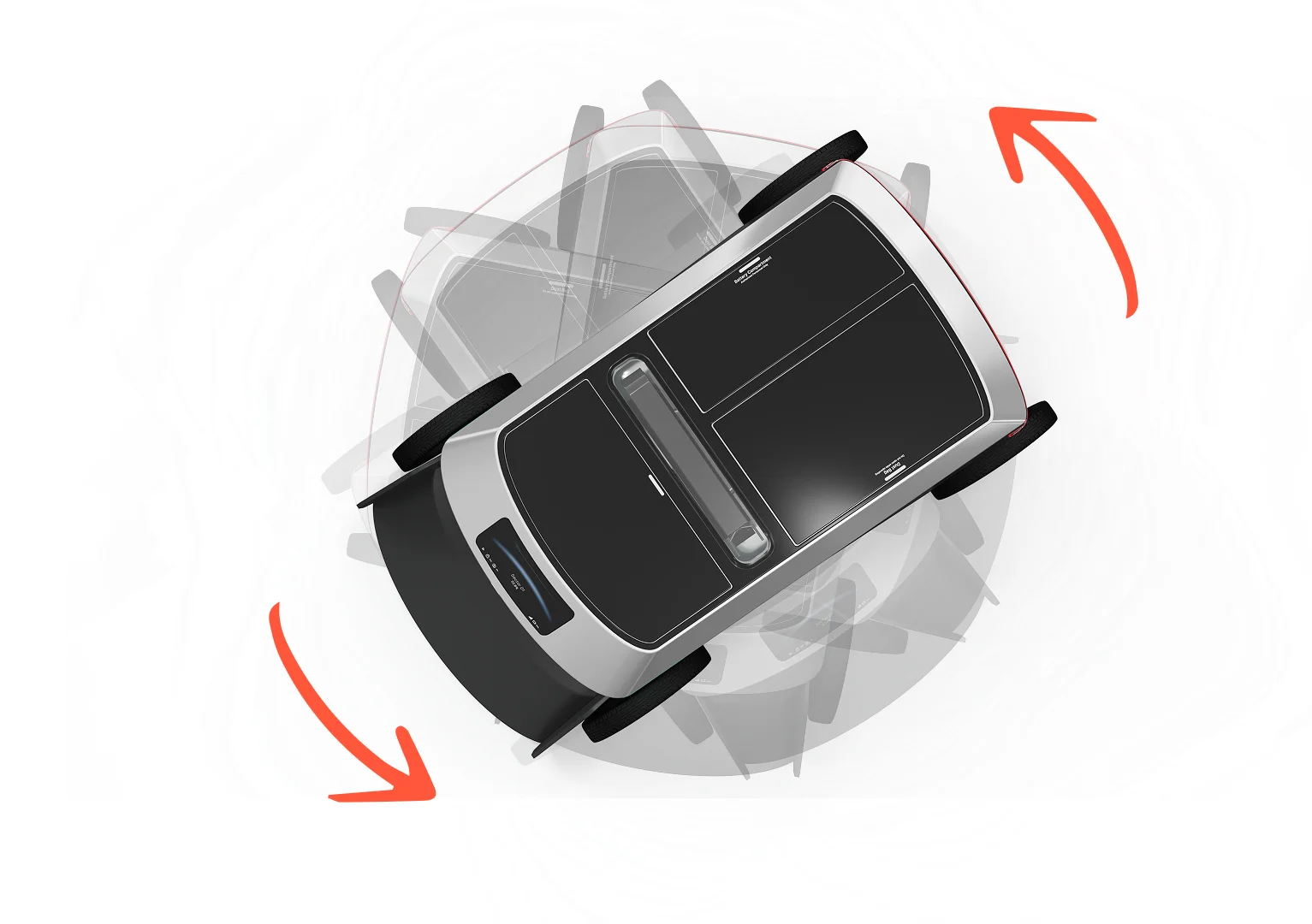
Four wheels, four motors: the body rotates in place, so a machine nearly a meter long reverses inside an aisle it almost fills.
Swallow First, Sort Later
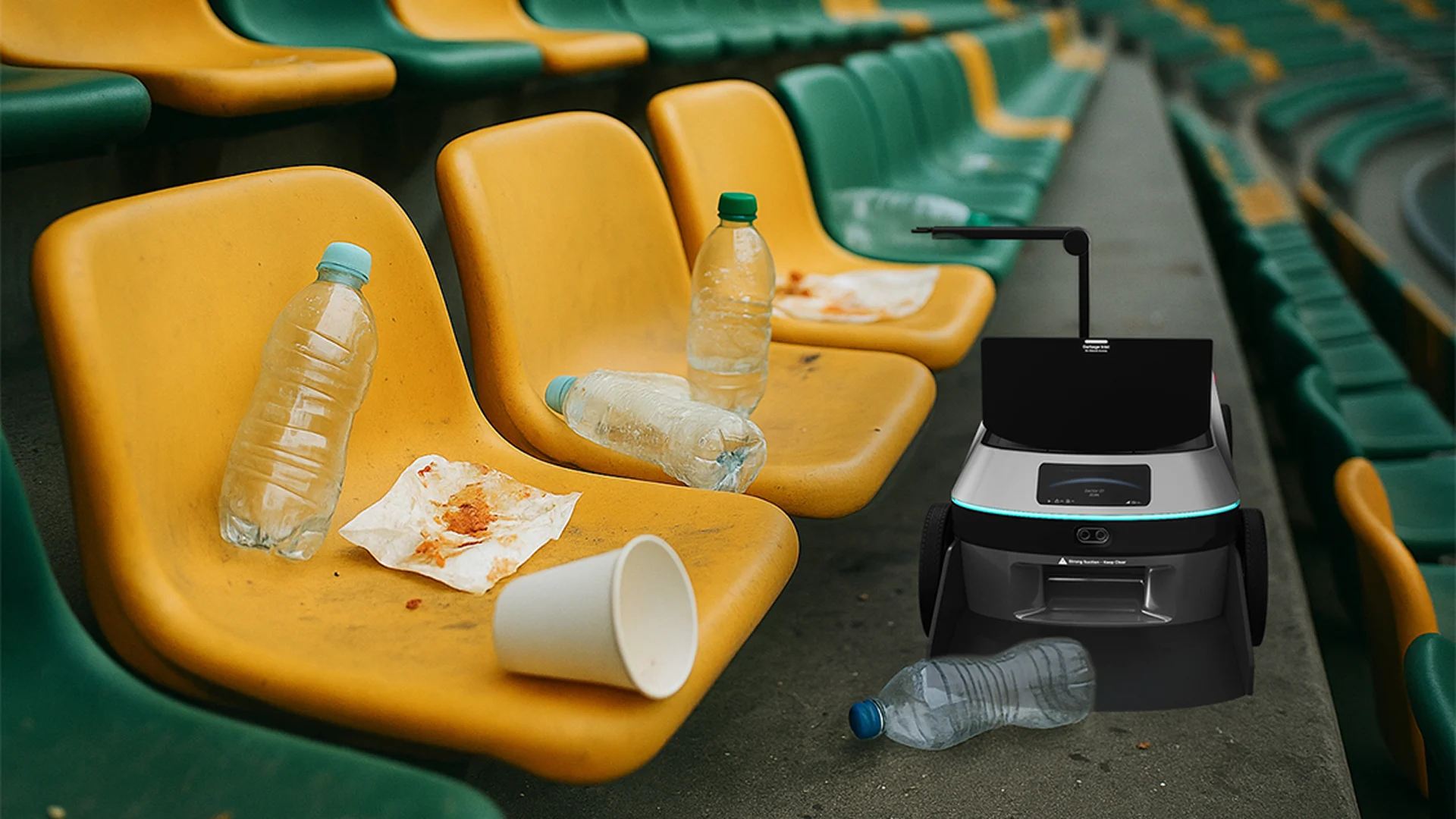
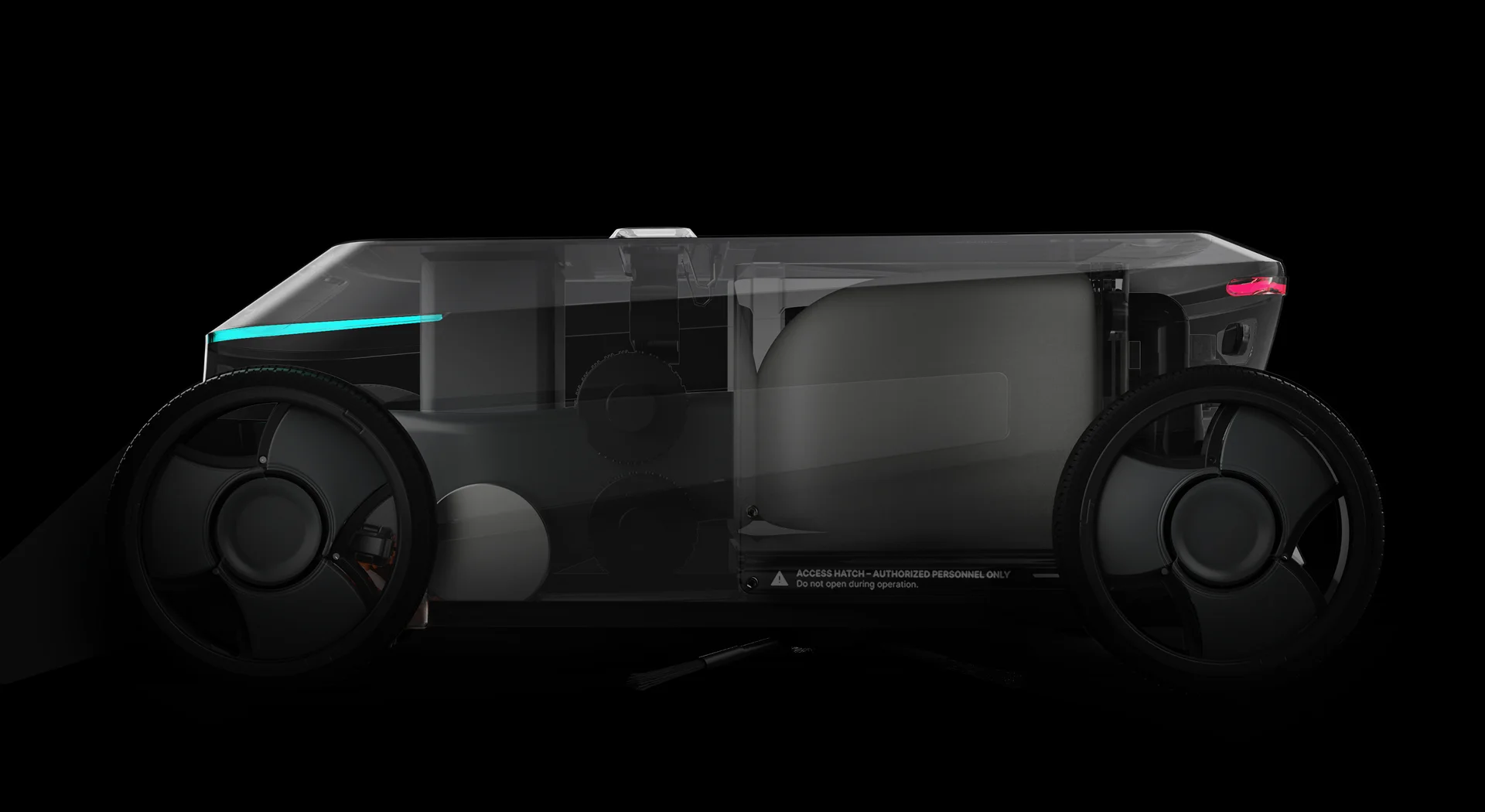
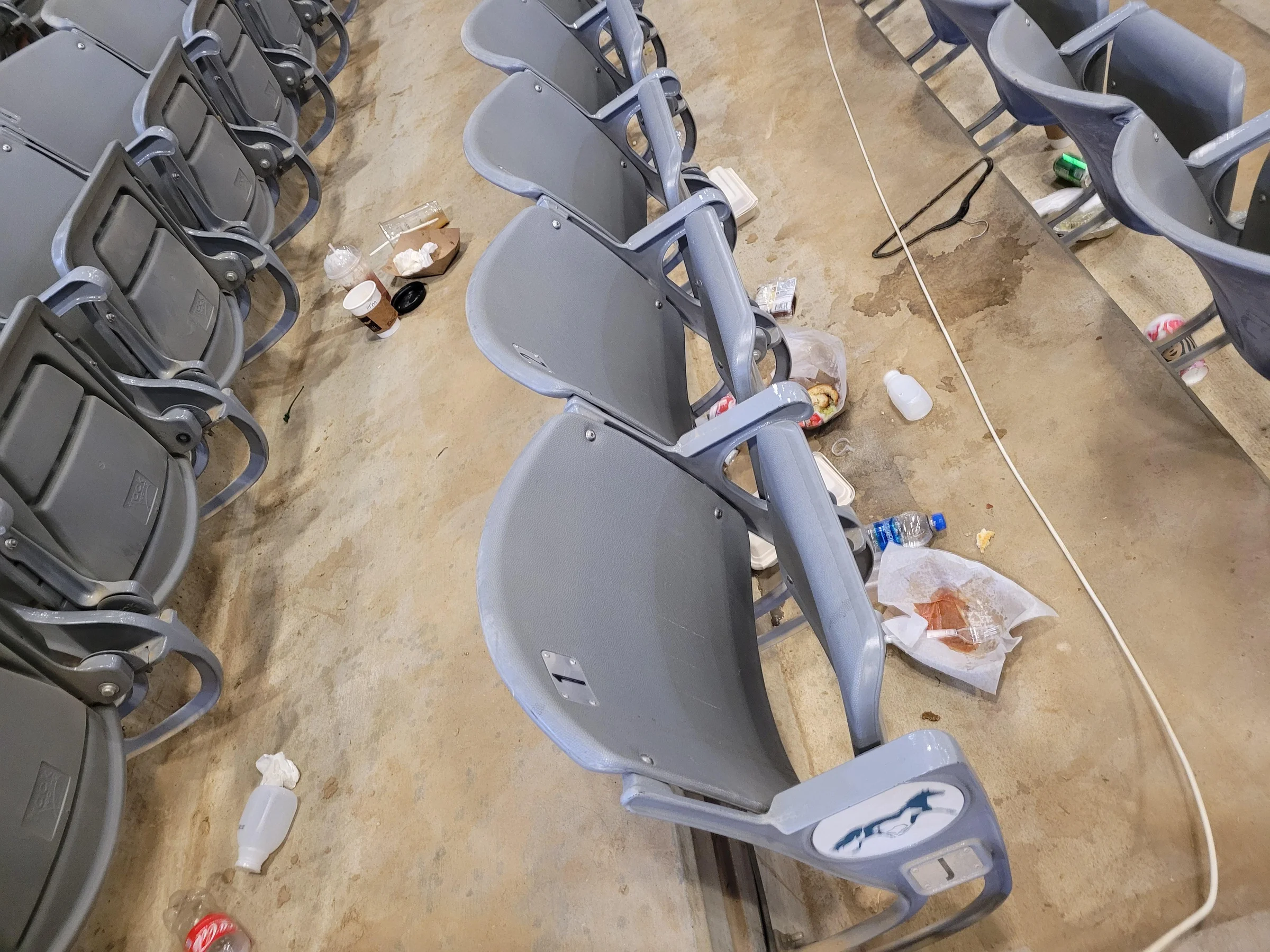
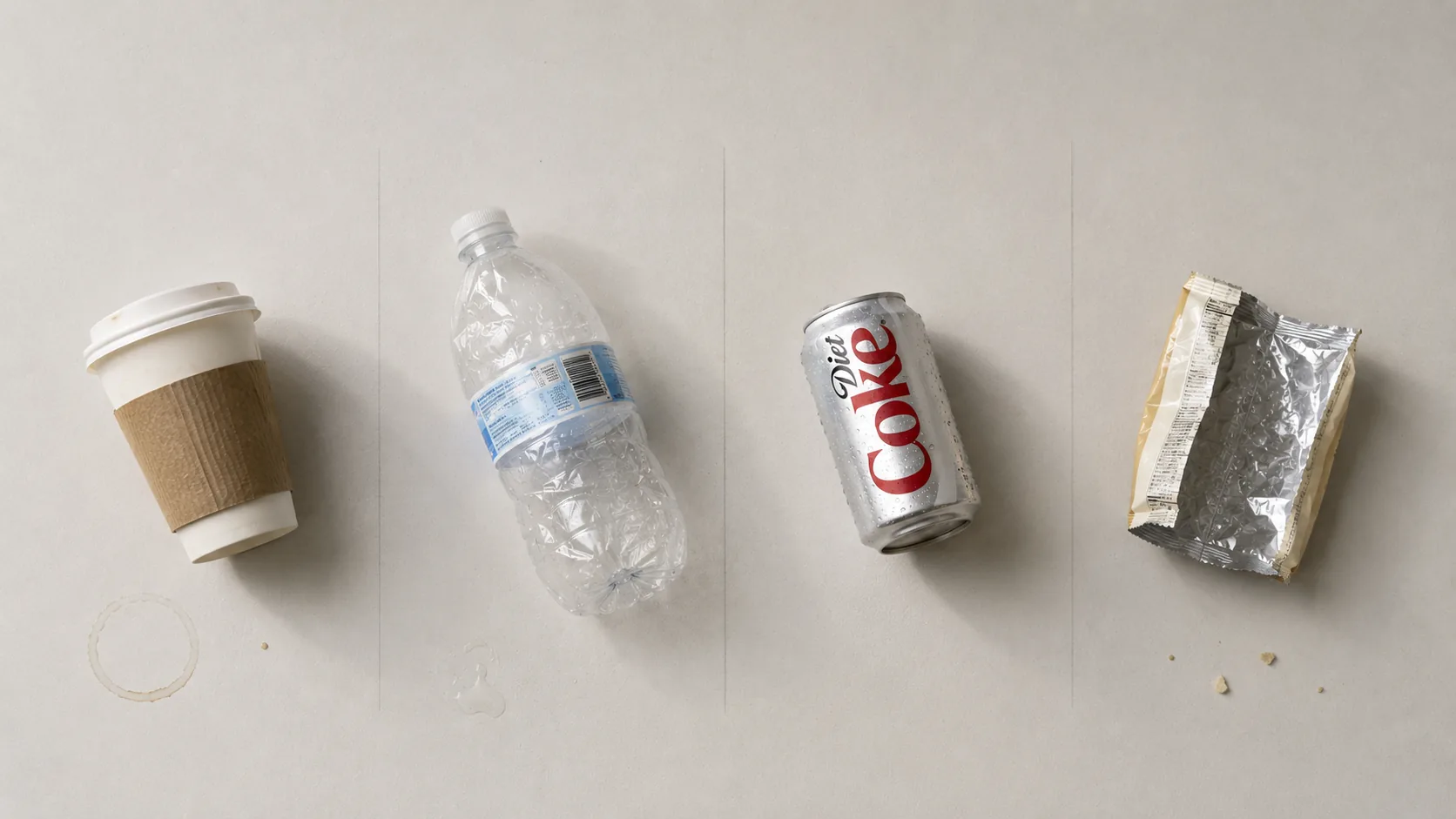
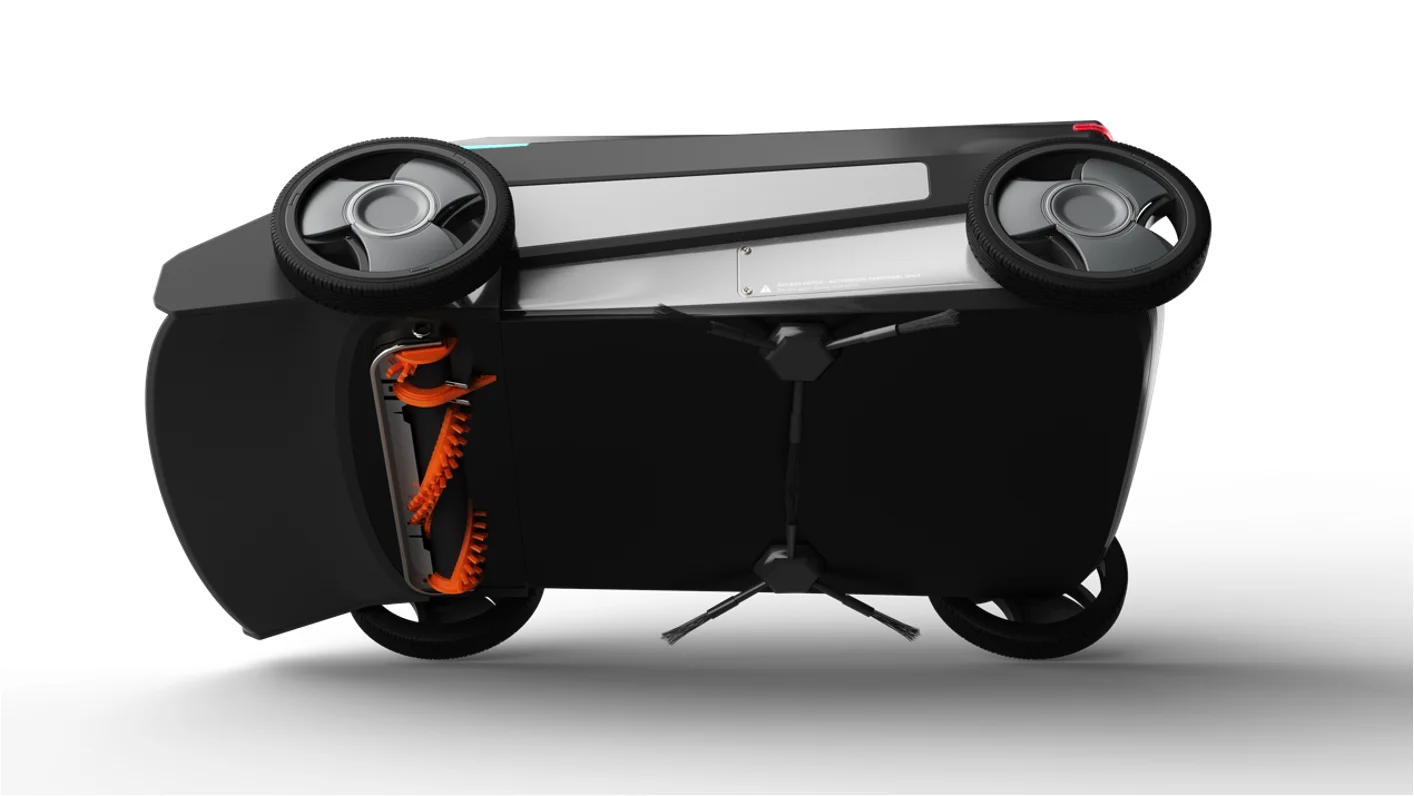
Event trash is oversized, so ZEAT leads with a high-suction intake wide enough to take cups and boxes whole, then compacts them with an internal roller.
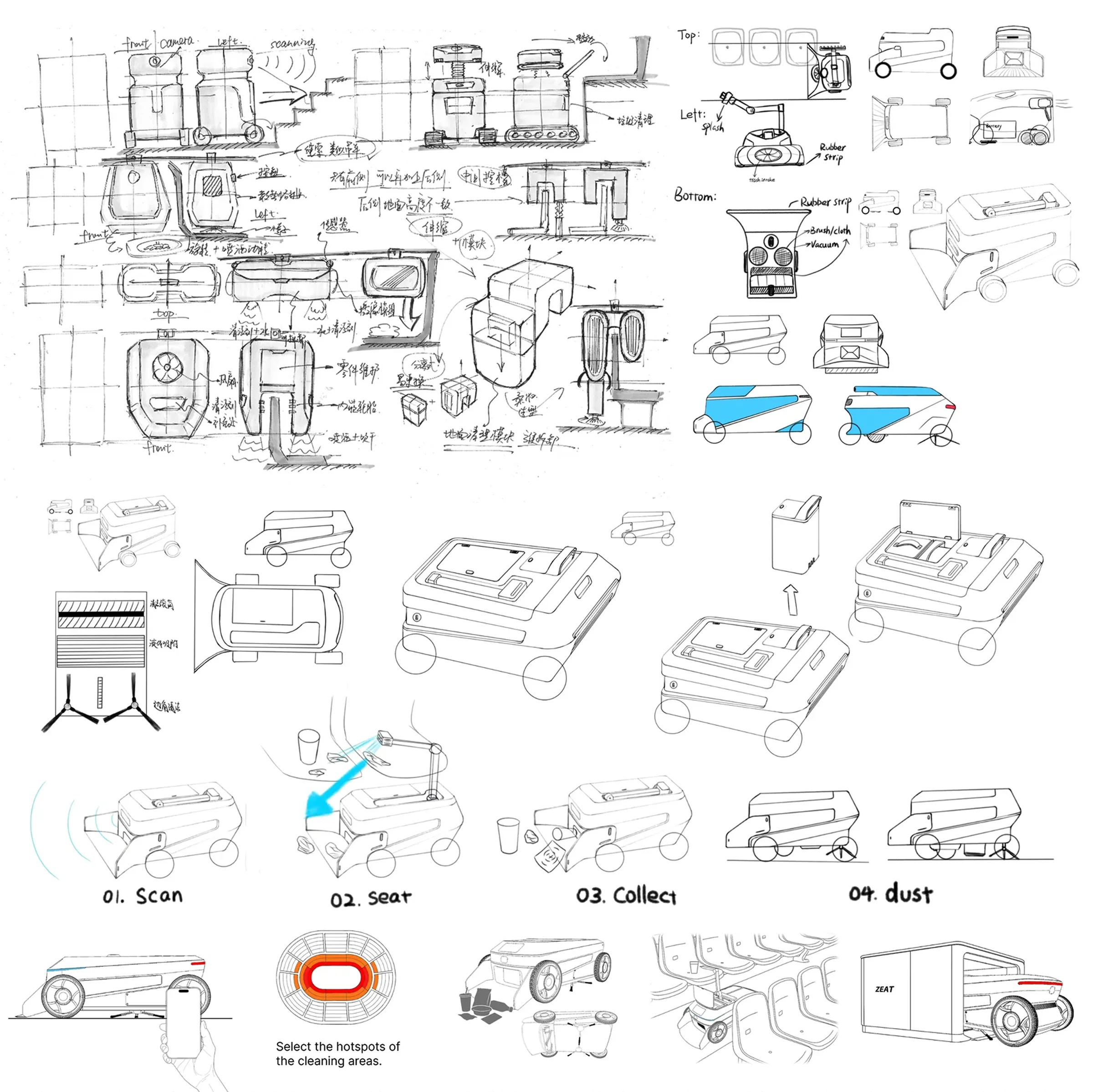
Drive and control hardware sits in the wheel housings and floor pan, leaving the middle of the machine empty for collection. The underbody does the fine work: toothed intake conveyor, cleaning roller, twin edge brushes for the space under the seats.
The Arm Is Why It's Not a Floor Robot
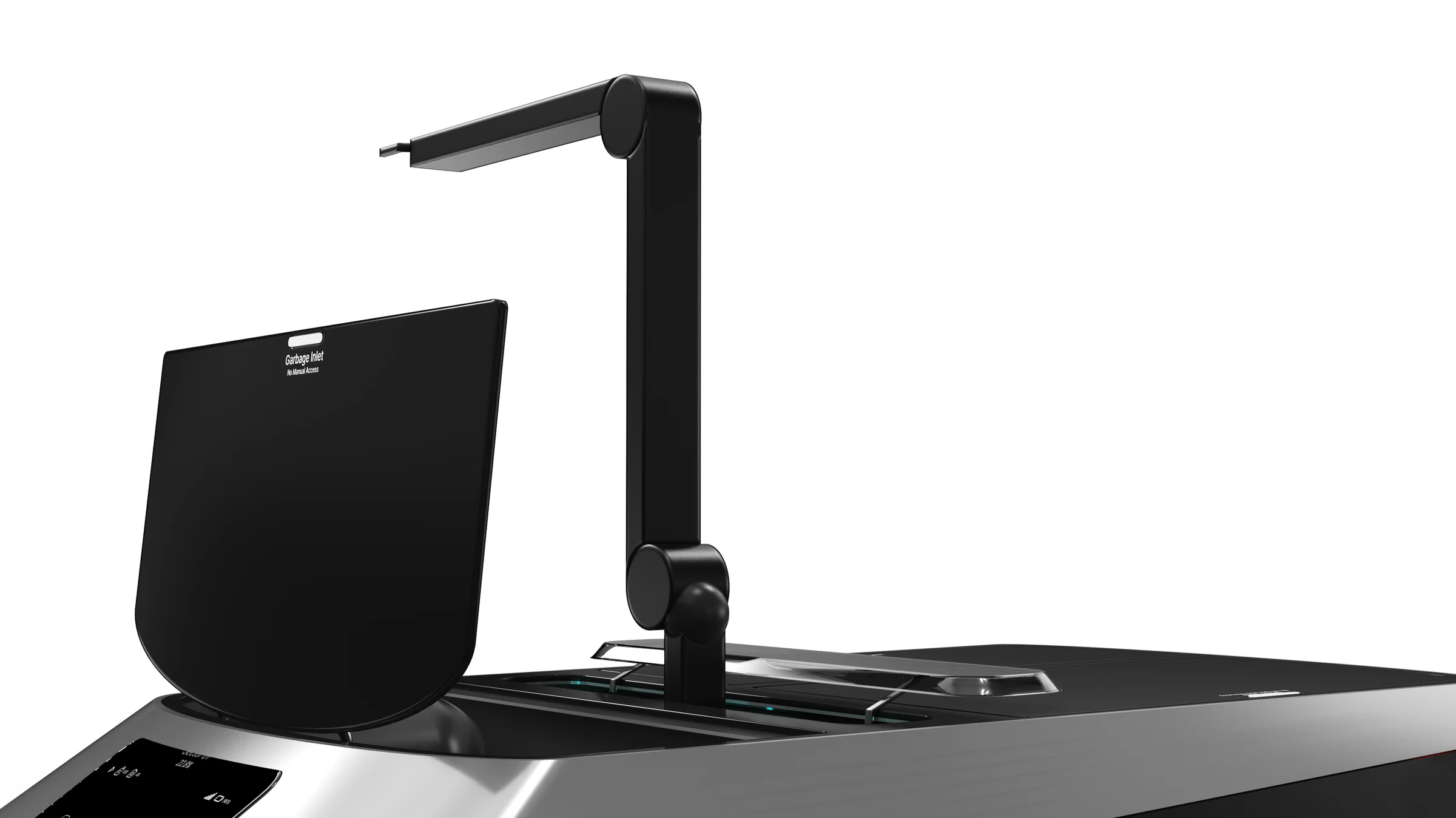
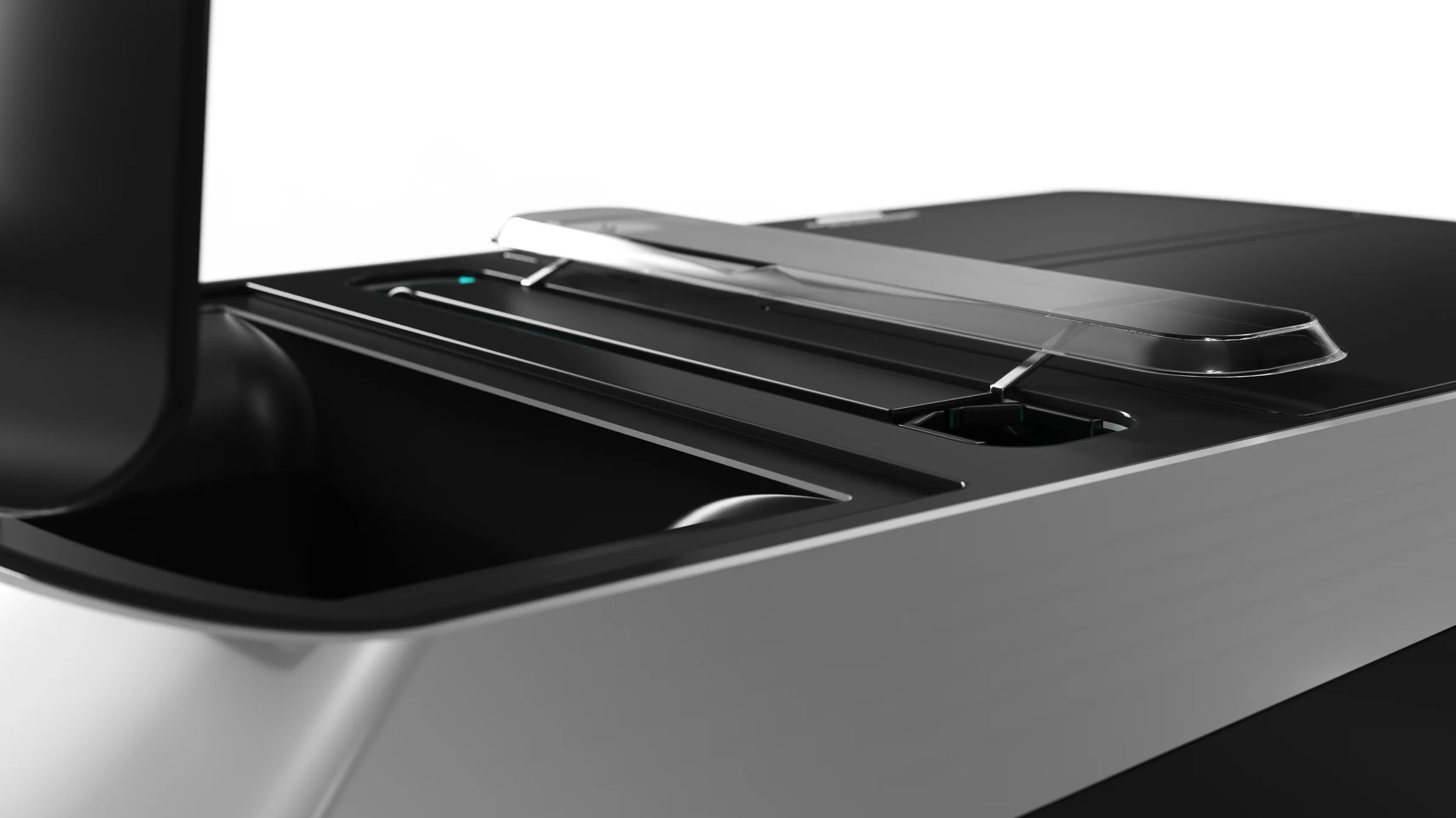
Half the trash never touches the floor. A folding arm lifts what the crowd left and drops it through a dedicated inlet, clearing one step's seat and the next step's seat back in the same pass.
Wheels That Trade Shape for Terrain
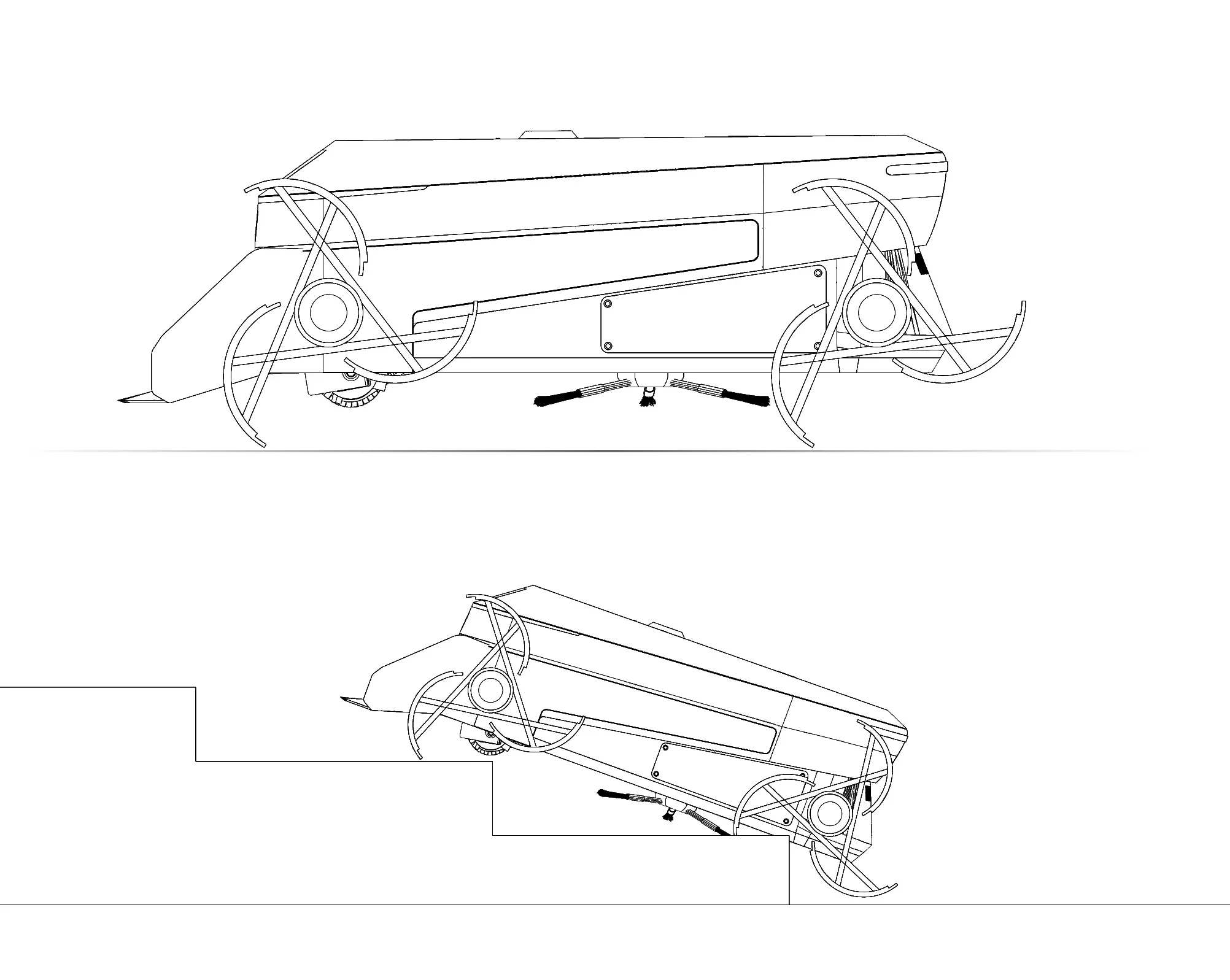
On flat ground the wheels stay round and roll. At a step, the rim opens into curved spokes that walk the machine up the riser, the obstacle that kills every other cleaning robot in this building.
Sensing
Cameras handle trash recognition on YOLOv5, ultrasonic radar covers obstacles, and an IMU with wheel encoders keeps the machine located on the venue map.
Built
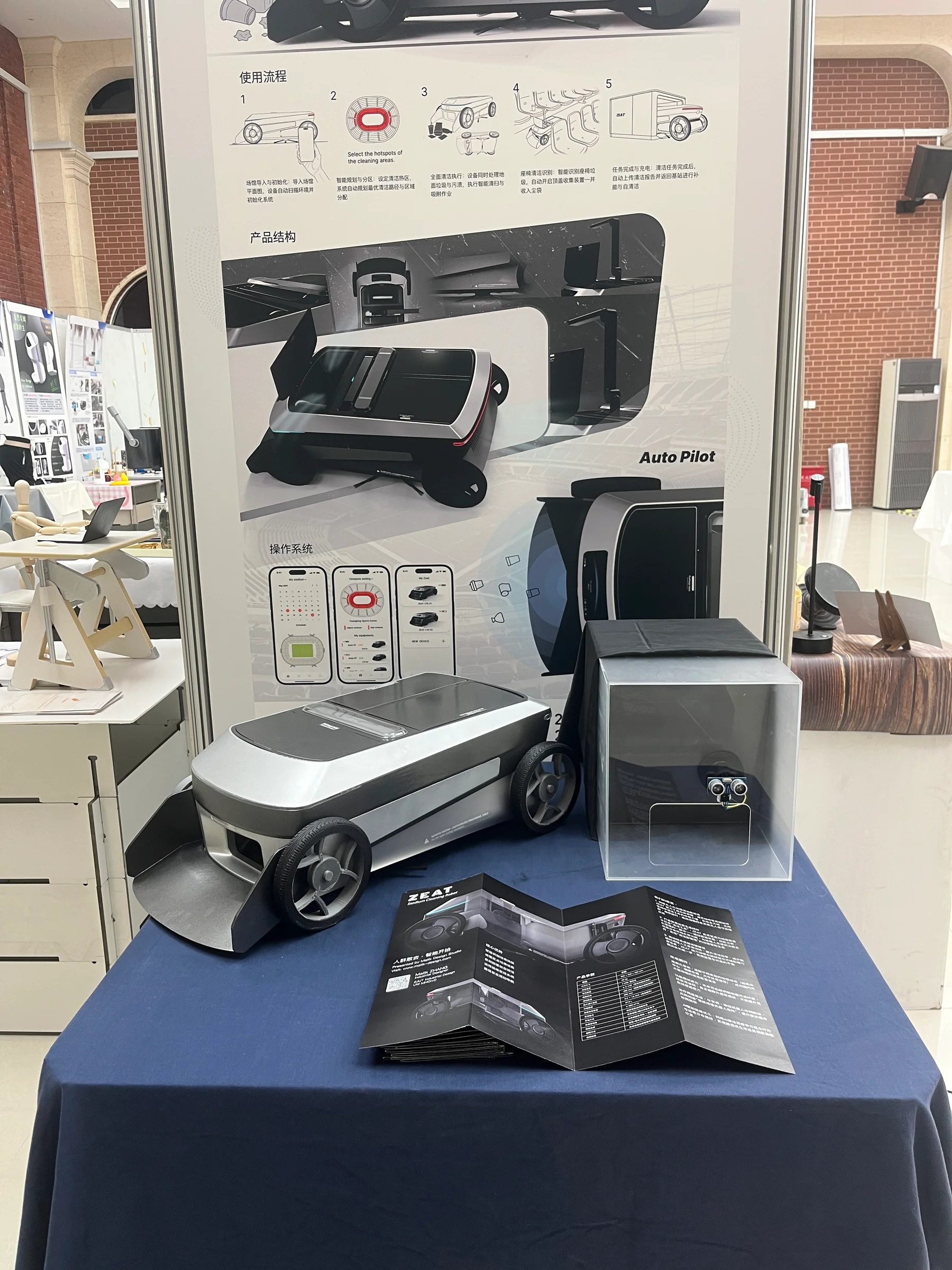
I modeled every component for fabrication, printed across SLA and FDM, finished the surfaces by hand, sprayed the paint, and assembled the body with its lighting. It is an appearance model in the production CMF, and it drives.
A render can hide a weak surface transition behind a camera angle. A painted part on a table in front of a critic cannot.